Chat with us, powered by LiveChat

What Is the Best Lung Exerciser from China?

Choosing the best lung exerciser from China starts with a clear question: best for whom, and for what purpose? Incentive spirometers encourage slow, deep inhalation, while respiratory muscle trainers provide resistance during breathing. They are not interchangeable. A device that looks sturdy on a product page may still feel awkward in the hand or difficult to clean.

The need for reliable respiratory support is significant. The World Health Organization reports that chronic obstructive pulmonary disease caused 3.5 million deaths in 2021, making it the world’s fourth leading cause of death. The American Thoracic Society’s 2023 pulmonary rehabilitation guideline recommends rehabilitation for adults with COPD and interstitial lung disease. These sources offer important context, but they do not establish one universally best device. A lung exerciser is not a replacement for medical assessment or a complete rehabilitation program. Numbers matter.

For buyers comparing Chinese suppliers, useful checks include clearly stated resistance settings, readable measurement markings, accessible cleaning instructions, and responsive technical support. Ask for evidence behind claims about materials, testing, and product performance rather than relying on promotional wording. Confirm that the intended users and training instructions are clearly described. Small details matter: a slippery mouthpiece or confusing dial can undermine an otherwise promising design. No ranking is perfect. Product specifications may not reveal how a device performs during daily use, and comparisons can miss real-world comfort. This guide examines practical features and supplier transparency to help identify a lung exerciser worth considering—not to declare a substitute for professional advice.
What Is the Best Lung Exerciser from China?

What Is a Lung Exerciser and How Does It Work?

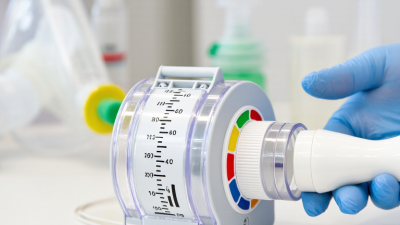
A lung exerciser is a device that guides breathing or adds resistance to breathing muscles. The term covers several designs, so two products may work quite differently. An incentive spirometer, often used after surgery, encourages a slow, deep inhale. As air enters, a piston or marker rises inside a clear chamber. The user may then hold the breath briefly, following the clinician’s instructions. Gentle and steady is usually better than a sudden gasp.

Other devices make inhaling or exhaling harder by adding adjustable resistance. With repeated, controlled practice, they can help train respiratory muscles for some people. They do not all improve lung function in the same way, and they are not a substitute for medical care. That distinction is easy to miss. The name can be confusing.

When comparing a lung exerciser from China or elsewhere, check that its resistance settings are clear, its instructions explain correct breathing, and its mouthpiece can be cleaned as directed. A stable marker is useful; a confusing one can make practice frustrating. Stop if you feel dizzy, unusually short of breath, or unwell, and seek professional advice. The right device depends on the person and the reason for using it. Even a well-made tool can be used poorly, so technique deserves a second look.

What Types of Lung Exercisers Are Made in China?

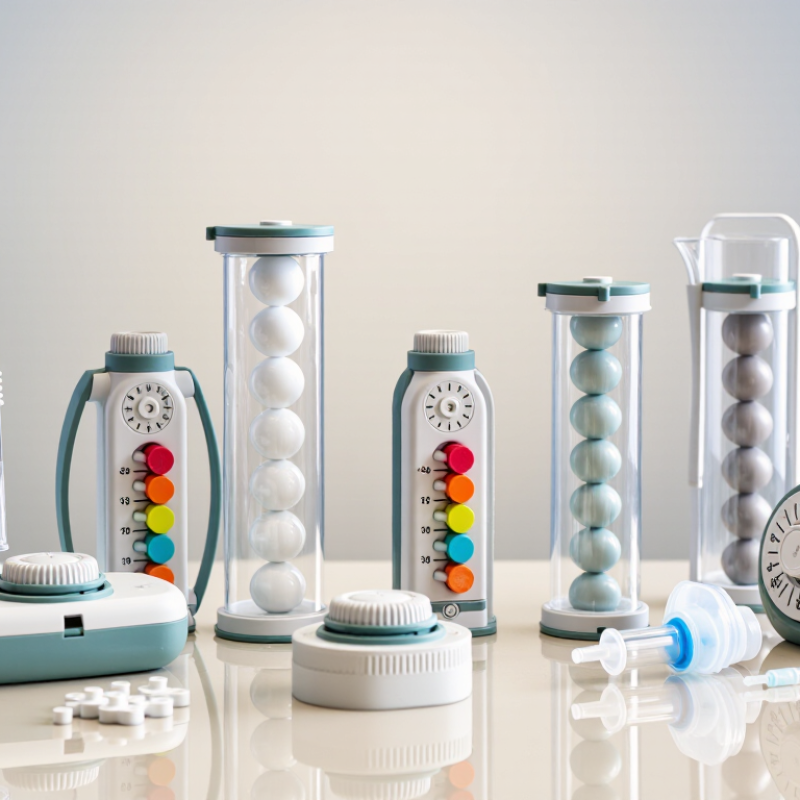
China-made lung exercisers generally fall into several practical categories. Incentive spirometers guide slow, deep inhalation, often using a piston or floating marker as visual feedback. Flow-based models may use colored balls that rise as the user breathes in. Simple to understand. Yet the marker shows airflow, not a full picture of lung health.

Respiratory muscle trainers use adjustable resistance during inhalation, exhalation, or both. Some use a threshold valve, which opens when the user reaches a set breathing effort. Positive expiratory pressure devices offer another approach: users breathe out against resistance, often through a mouthpiece. Designs vary in resistance range, valve structure, and cleaning requirements. Small details matter.

When comparing these types, check whether resistance is clearly adjustable, the mouthpiece fits comfortably, and removable parts can be cleaned as directed. Clear instructions and consistent measurement markings are useful signs of thoughtful design, though they do not prove clinical suitability. A device should match the user’s needs and, where appropriate, a clinician’s guidance. I would not choose one by appearance alone. A low-cost model may be adequate for basic practice, but unclear settings or awkward cleaning can make regular use harder.

What Is the Best Lung Exerciser from China? What Types of Lung Exercisers Are Made in China?

Device type How it works Common purpose Typical features What to consider when choosing
Incentive spirometer (volume-oriented) The user inhales slowly through a mouthpiece, raising a piston or marker to provide visual feedback about inhaled volume. Supports coached deep-breathing practice, often as part of a clinician-directed recovery or breathing routine. Graduated volume scale, mouthpiece, tubing, and a visual target; may be single- or multi-chamber. Check scale readability, ease of cleaning, and whether the model matches the instructions provided by a healthcare professional.
Incentive spirometer (flow-oriented) The user inhales through the device to lift one or more indicators, giving feedback on inspiratory flow. Encourages slow, controlled inhalation and visual breathing practice. Flow indicators, a mouthpiece, and a compact handheld body. Choose a clear, easy-to-read indicator and a resistance level appropriate to the user's ability and clinical guidance.
Inspiratory muscle trainer Provides resistance while the user breathes in, making the inspiratory muscles work against a set load. Structured inspiratory muscle training when recommended and supervised as appropriate. Often includes an adjustable resistance setting, mouthpiece, and sometimes a pressure indicator. Look for clearly specified resistance settings and a design that can be cleaned and used comfortably.
Expiratory muscle trainer Provides resistance while the user breathes out through the device. Targeted expiratory muscle training under an appropriate exercise plan. Resistance valve or adjustable setting, mouthpiece, and sometimes a pressure gauge. Confirm that the device is intended for expiratory training and that its load can be matched to professional advice.
Positive expiratory pressure (PEP) device Creates resistance during exhalation, producing positive pressure in the airways. May be used in airway-clearance routines prescribed or demonstrated by a healthcare professional. Resistance outlet, mouthpiece or mask connection, and sometimes a manometer. Use the prescribed pressure and technique; verify compatible accessories and cleaning instructions.
Oscillatory PEP device Combines expiratory resistance with vibrations or pressure oscillations during exhalation. Airway-clearance practice when advised by a clinician. May use a moving component or internal mechanism to create oscillations; handheld designs are common. Check that the device can be disassembled and cleaned as directed, and ask a clinician to demonstrate correct use.

How to choose: There is no single best lung exerciser for everyone. The right type depends on the intended purpose, the user's condition, and professional guidance. Product specifications and available configurations vary by manufacturer. These devices are not substitutes for medical evaluation or prescribed treatment.

Which Features Distinguish a High-Quality Lung Exerciser?

A high-quality lung exerciser is defined by measurable function, not its country of origin. Look for adjustable resistance or clearly marked breathing targets, so users can follow a consistent routine rather than guess how hard to inhale or exhale. The dial should move smoothly, and the markings should remain readable in ordinary room light. Small details matter.

A comfortable mouthpiece should fit securely without sharp edges, while detachable parts make cleaning easier. Check that the instructions explain setup, breathing technique, and care in plain language. Reliable manufacturing information and appropriate quality testing also help buyers assess a device, though labels alone do not prove clinical benefit. Ask a healthcare professional which type suits your needs, especially if you have a respiratory condition or feel dizzy during use. Stop if breathing becomes uncomfortable.

Ease of use counts. A complicated device may sit unused. It is worth admitting that resistance settings can feel different between models, so comparing numbers alone may mislead. Consider the fit, feedback, cleaning steps, and return policy before choosing. The best option is one that supports a safe, repeatable routine—not the one with the most features.

How Do Safety Standards and Evidence Vary Among Models?

What Is the Best Lung Exerciser from China?
How Do Safety Standards and Evidence Vary Among Models?

A lung exerciser should be judged by its intended use, safety documentation, and evidence—not its country of origin. Some devices provide visual feedback, while others add adjustable resistance. That matters. A clear indicator can help users follow a breathing routine, but it does not prove clinical benefit. Check whether instructions explain correct use, cleaning, and warning signs, and whether the seller can provide relevant test reports for the specific model.

Standards do not always cover the same device types. The ATS/ERS 2019 spirometry technical statement sets diagnostic spirometer accuracy requirements, including a ±2.5% limit in testing with a 3-liter syringe. That benchmark is useful context, but it does not automatically certify a simple breathing exerciser. Ask what was tested, by whom, and against which standard. I would be cautious here: a neat scale can look more scientific than it is.

Evidence also depends on the device and clinical setting. A 2014 Cochrane review examined 12 trials involving 1,834 patients after upper abdominal surgery; it found very low-quality evidence and no clear benefit from incentive spirometry for preventing postoperative lung complications. The review does not settle every use case. It does show why a device’s claimed outcomes should match published studies, rather than rely on general “lung strengthening” language. Before use, people with breathing problems should seek clinical guidance.

What Is the Best Lung Exerciser from China?

How safety standards and clinical evidence vary among models

This chart counts checklist items, not product ratings. For a medical device, check applicable NMPA registration and intended use, risk management, quality-system documentation, and patient-contact material information where relevant. Then look for clinical evaluation and performance evidence that support the specific claims. Standards such as ISO 13485 and ISO 14971 address quality management and risk management; they do not, by themselves, prove clinical benefit. Requirements depend on device classification and intended use.

How Can You Choose the Best Chinese Lung Exerciser for Your Needs?

What Is the Best Lung Exerciser from China?

How Can You Choose the Best Chinese Lung Exerciser for Your Needs?

Choose a device that matches your goal, not simply the highest resistance setting. Incentive spirometers help users practise slow, deep inhalation, while threshold trainers provide adjustable inspiratory resistance. Ask a clinician which type suits your health and training plan. Look for clear markings, comfortable mouthpieces, stable resistance, and instructions written in plain English. Small details matter: a scale that is hard to read can make daily practice frustrating.

Check the supplier’s quality records, product test reports, material information, and batch traceability. Request cleaning instructions and replacement-part availability before ordering. The World Health Organization reports that chronic obstructive pulmonary disease caused 3.5 million deaths worldwide in 2021; this highlights respiratory-health needs, but does not prove that an exerciser treats lung disease. The American Association for Respiratory Care’s 2011 incentive-spirometry guideline advises against routine use as a stand-alone preventive measure. A device is not a substitute for clinical care. I would also question impressive claims without supporting evidence.

Tips: Ask for a sample and test its resistance, grip, and readability. Confirm that the user can clean it safely. Compare the seller’s documents with your clinician’s advice. A low price can be tempting, but I would not choose on price alone.

TOP