Breathing devices can look simple on a product page: a mouthpiece, a dial, and a few resistance settings. Choosing the right lung exercise machine is less straightforward. The best option depends on its intended use, your breathing goals, and advice from a qualified healthcare professional. A device used for inspiratory muscle training is not automatically suitable for every person with a respiratory condition.
The need for careful choices is real. The World Health Organization reported that chronic obstructive pulmonary disease caused 3.23 million deaths worldwide in 2019; its estimates also recorded 262 million people living with asthma in 2019. These figures describe major health burdens, not proof that a training device can prevent or treat either disease. The 2024 Global Initiative for Chronic Obstructive Lung Disease report likewise emphasizes individualized assessment and evidence-based care. That context matters. A machine should support an appropriate plan, not replace diagnosis, medication, or professional guidance.
Before buying, compare resistance adjustment, measurement clarity, cleaning needs, comfort, portability, and return policies. Check whether the maker explains who the device is for and how progress should be tracked. Small details matter. A mouthpiece that feels awkward or settings that are hard to read may leave a device unused in a drawer. Evidence can also be uneven across products and user groups. That deserves a pause. These seven tips will help you assess claims, spot practical trade-offs, and ask better questions before spending money. They cannot choose a device for you, and that limitation is worth remembering.
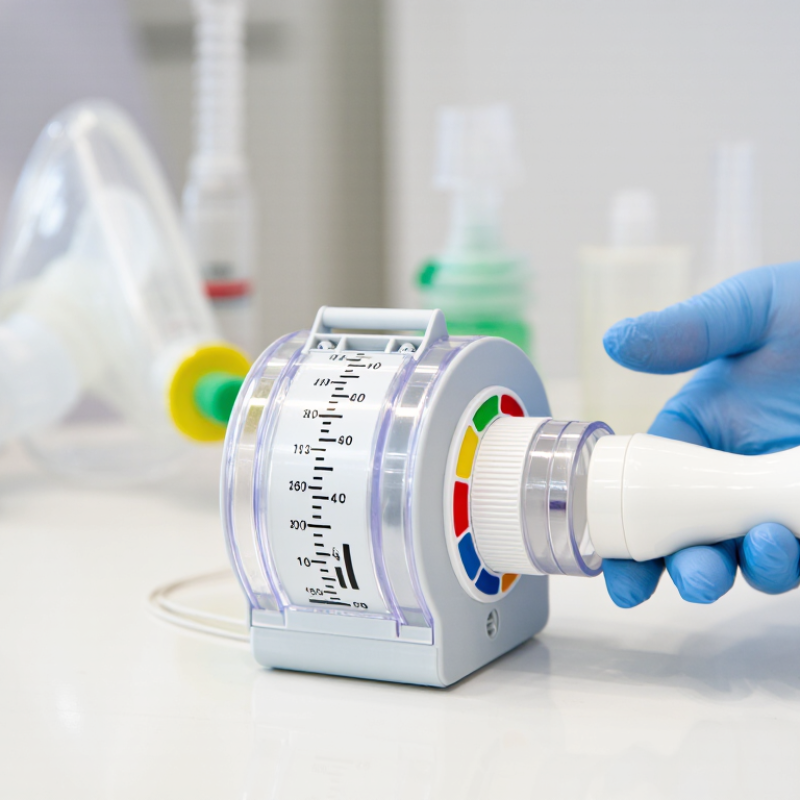
A “lung exercise machine” can mean several devices, and they do different jobs. An incentive spirometer encourages slow, deep inhalation, often during recovery after surgery. An inspiratory muscle trainer adds resistance as you breathe in, aiming to strengthen the breathing muscles. Positive expiratory pressure devices work as you breathe out and may help move mucus. Not the same job. Check the device’s intended use, not just its name or appearance.
For a useful comparison, a 2013 Cochrane review examined 32 trials involving 818 people with chronic obstructive pulmonary disease. It found that inspiratory muscle training could improve inspiratory muscle strength, though benefits to daily function were less certain. That distinction matters. If your goal is airway clearance, a strength-training device may not fit; if you want breathing-muscle training, an incentive spirometer may not provide resistance. Ask a clinician which function matches your needs, especially if you have a lung condition. It is easy to overvalue a digital screen or a high resistance setting. I might, too. Look for clear instructions, adjustable resistance where appropriate, and a mouthpiece you can clean easily.
Tip: Match resistance to the breathing task you want to practice. A gentle setting may suit steady, controlled inhalations, while a stronger setting can make each breath feel more demanding. More resistance is not automatically better. If your shoulders tense or you gasp, lower the setting and regain a smooth rhythm.
Tip: Start at the easiest level and follow the device instructions. Try a few calm breaths while seated, then pause and notice how your chest and breathing feel. Increase resistance gradually, not by several steps at once. The right level should feel challenging but manageable; that line can be surprisingly easy to misjudge.
Tip: Choose a machine with clear, adjustable settings if your goals may change. Keep a simple note of the level, number of breaths, and any discomfort, so you can spot patterns instead of guessing. Stop if you feel dizzy, unusually short of breath, or have chest pain. If you have a lung condition or symptoms that worry you, ask a qualified healthcare professional which resistance and routine are appropriate. A device is practice equipment, not a substitute for medical care.
Use perceived effort—not a device’s setting number—to think about the resistance that may suit your goal.
The 0–10 scale is a subjective effort-rating format; the plotted values are illustrative examples, not clinical targets or resistance settings. Device scales differ, so start comfortably, increase gradually, and follow the manufacturer’s instructions. Seek professional guidance if you have a respiratory condition or symptoms.
A lung exercise machine should fit your body and your routine, not just look advanced. Check that the mouthpiece seals gently without forcing your jaw forward. If the device uses a mask, look for adjustable straps and a soft edge that does not press hard across your nose. A poor fit can cause air leaks and make each session frustrating. Small details matter.
Tip 1: Try the mouthpiece or mask before buying, if possible. Sit upright and take a few slow breaths. Notice whether your lips stay sealed and whether the device feels stable. If you feel dizzy or unusually short of breath, stop and ask a healthcare professional whether the exercise is suitable for you.
Tip 2: Choose controls you can use without guessing. A clear resistance dial, readable display, and simple cleaning instructions help make practice easier to repeat. The 2019 ATS/ERS spirometry technical standard says measuring devices should be accurate within ±2.5% when tested with a 3-liter syringe. That standard applies to spirometry, not every breathing trainer, so treat a trainer’s numbers as progress cues rather than clinical test results. I would still compare the instructions with advice from your clinician. And check the cleaning steps. A device that is awkward to wash may end up unused.
Before buying a lung exercise machine, check that its resistance can be adjusted gradually. Clear settings help users avoid starting with more effort than they can manage. Look for simple instructions, stable construction, and a mouthpiece that fits comfortably without sharp edges. The device should feel secure in your hand, not slippery or flimsy. Small details matter. If you have a respiratory condition or feel unsure about suitable resistance, ask a healthcare professional for guidance.
Cleaning and durability deserve equal attention. Choose a design with removable parts that can be washed according to the maker’s instructions. Narrow channels and hidden seams can trap moisture or residue, making thorough cleaning difficult. Let parts dry completely before reassembly. Check whether replacement mouthpieces or filters are available, and inspect joints for looseness or cracks. It is easy to focus on extra features and overlook daily care; I would not assume a complicated device is automatically better. A basic model that is easy to clean and comfortable to use may be the more practical choice.
| Tip | What to Check | Safety and Cleaning | Durability and Practicality |
|---|---|---|---|
| 1. Identify the device type | Confirm whether the device is an incentive spirometer, an inspiratory muscle trainer, or another breathing exerciser. These devices are designed for different uses and are not interchangeable. | Choose a device that matches guidance from a qualified healthcare professional, especially if it is intended for use after surgery or for a diagnosed condition. | Check that the instructions clearly explain the device’s intended use, setup, and limitations. |
| 2. Look for adjustable, understandable settings | For a resistance trainer, check how resistance is adjusted and whether the setting is clearly marked. For an incentive spirometer, check that its visual indicator is easy to read. | Settings should be easy to change without forcing the user to strain. Follow the supplied instructions rather than selecting a target by guesswork. | Inspect adjustment parts and markings for clear labels and a secure, repeatable fit. |
| 3. Review safety and comfort features | Check that the mouthpiece fits comfortably, the tubing or connectors attach securely, and the device is stable during use. | Look for smooth, intact parts and instructions about stopping if use causes pain, dizziness, or unusual shortness of breath. Ask a healthcare professional about concerns or symptoms. | A simple design with secure connections is easier to inspect and less likely to be frustrating to use. |
| 4. Check cleaning requirements | Read which parts can be cleaned, how they should be cleaned, and whether any parts are intended for single-person use. | Follow the manufacturer’s cleaning instructions. Do not assume the whole device can be immersed, put in a dishwasher, or treated with disinfectant. | Removable parts and straightforward instructions can make routine cleaning easier. Confirm whether replacement mouthpieces or other parts are available. |
| 5. Inspect materials and construction | Look for clear information about the materials, smooth edges, sturdy connectors, and parts that do not feel loose or brittle. | Check that the mouth-contacting components are suitable for their stated use and can be kept clean according to the instructions. | Prefer a device with parts that are easy to inspect and replace. Avoid using it if components are cracked, warped, or damaged. |
| 6. Consider portability and storage | Check the device’s size, whether it can be disassembled as intended, and whether it comes with a protective storage case or cover. | Store the device in a clean, dry place and protect the mouthpiece from dust and contact with unclean surfaces. | A portable device is useful only if it can be stored and transported without bending tubing or damaging moving parts. |
| 7. Verify instructions, support, and replacement parts | Check for complete instructions, a way to contact the seller or manufacturer, and clear information about warranties and replacement components. | Instructions should explain intended users, cleaning, and any situations where professional advice is appropriate. | Availability of replacement parts and a stated warranty can help you assess long-term serviceability before purchase. |
Important: A breathing exercise device is not a substitute for medical evaluation or prescribed treatment. Ask a healthcare professional which type is appropriate for your needs and how to use it safely.
Price is only one part of the decision. Check whether the machine includes replacement parts, cleaning supplies, and clear instructions. Tip: compare the total first-year cost, not just the shelf price. A low-cost device may become less economical if mouthpieces or filters need frequent replacement. Not always obvious.
Warranty terms deserve a close read. Compare coverage length, repair options, shipping costs, and exclusions for normal wear. Ask how replacement parts are obtained and whether the device needs periodic checks. I would not assume the most expensive model is safer; that shortcut feels tidy, but it may be wrong.
Tip: seek professional guidance before choosing a device, especially if you have a diagnosed lung condition or are recovering from surgery.
The American Association for Respiratory Care’s 2011 evidence-graded guideline recommends incentive spirometry alongside deep breathing, directed coughing, early mobilization, and appropriate pain control (Grade 1B). It does not recommend using the device alone as routine care (Grade 1A).
Ask a respiratory therapist or clinician to demonstrate the technique and check your fit. A brief hands-on review can reveal a mouthpiece that leaks or a breathing pace that feels strained.
A device is not a treatment plan.
Get the instant quotes from our sales representatives!
HEMC (Hospital Equipment Manufacturing Company) was established in the year 1981 and has since been engaged in the export of Medical equipments, Hospital equipments, Orthopaedic Implants & instruments, Laboratory equipments, Scientific & Educational products worldwide. Your support has made us a "Government of India" recognised export house. Our goods have reached all continents from "The Americas" to "Europe" and beyond…