Chat with us, powered by LiveChat

Top Surgical Equipment Suppliers for Global Buyers

Choosing reliable surgical equipment suppliers is a critical decision for hospitals, clinics, distributors, and healthcare procurement teams worldwide. The right partner affects operating room safety, staff efficiency, maintenance costs, and patient care. Global buyers must examine more than product prices. They should review manufacturing experience, quality systems, technical documentation, warranty terms, and after-sales support.

Details matter.

A dependable supplier can explain how instruments are tested, packaged, sterilized when applicable, and tracked through production. Buyers should also confirm product specifications, regional compliance requirements, delivery capacity, and training services. A supplier with experienced engineers may respond faster when a surgical table stops moving or an electrosurgical unit displays an unexpected warning. Practical support often matters more than a polished catalog.

No supplier is perfect.

Even established manufacturers may have limited stock, delayed communication, or uneven service across regions. This is why buyers should request references, inspect sample products, and compare written commitments carefully. Independent verification remains valuable, especially when purchasing complex systems or large equipment packages. Claims about safety, durability, and clinical performance should be supported by appropriate evidence, not vague marketing language.

This guide introduces leading surgical equipment suppliers serving global markets. It considers product range, manufacturing capabilities, certifications, service networks, customization options, and buyer feedback. The goal is not to promote one company blindly. It is to help decision-makers ask better questions, identify realistic strengths, and recognize potential gaps before signing a purchase agreement. Careful evaluation takes time, but it can prevent costly interruptions in clinical practice.

Top Surgical Equipment Suppliers for Global Buyers

Definition and Role of Surgical Equipment Suppliers

Surgical equipment suppliers are more than companies that move products from factories to hospitals. They connect manufacturers, healthcare facilities, surgeons, and service teams across different markets. A reliable supplier helps buyers select suitable instruments, operating tables, imaging systems, and monitoring devices.

Not just a seller.

Their role begins with product sourcing and technical verification.

Experienced suppliers review specifications, material quality, sterilization compatibility, and intended clinical use. They should provide clear documentation, including instructions, certificates, maintenance schedules, and traceability records.

Small details matter.

A missing serial number can complicate repairs or equipment recalls.

Suppliers also support installation, user training, preventive maintenance, and replacement planning. These services reduce downtime when a surgical light fails or a device needs calibration.

For global buyers, suppliers must understand import procedures and the healthcare requirements of each destination. They should communicate limitations honestly, rather than promise universal compliance.

That gap matters.

Professional judgment remains essential during procurement.

The lowest quotation may hide higher training, service, or replacement costs. Buyers should ask about response times, spare-part availability, warranty terms, and technical support after delivery.

A perfect process rarely exists.

Even experienced suppliers can overlook a practical issue, such as voltage differences or limited hospital storage.

Careful review, written records, and direct conversations help expose those weaknesses before equipment reaches the operating room.

Key Categories of Surgical Equipment for Global Buyers

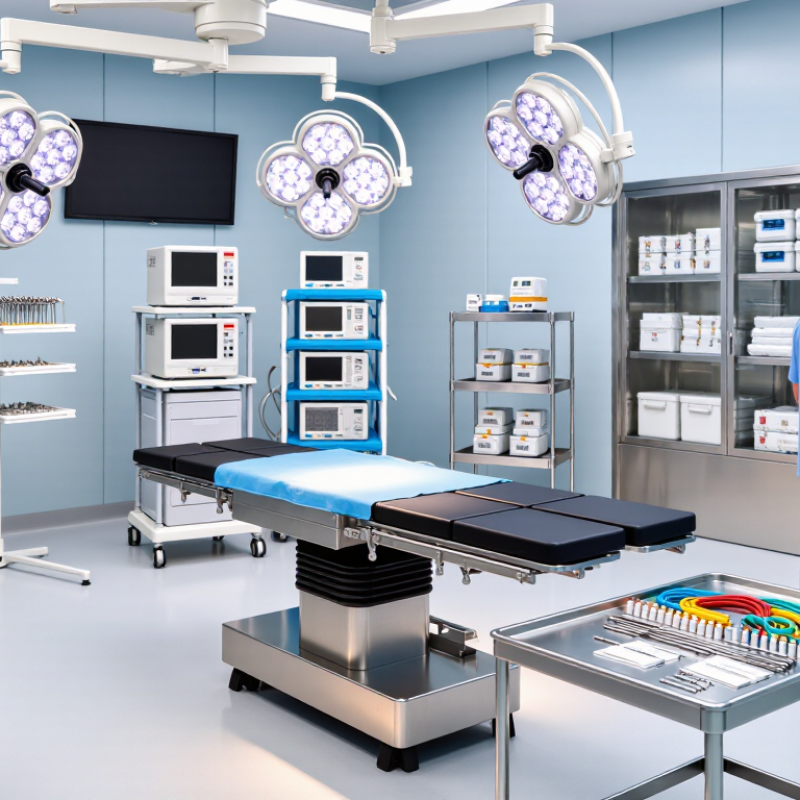
Global buyers should map surgical equipment by clinical function, not catalogue size. Core categories include operating tables, surgical lights, patient monitors, anesthesia workstations, electrosurgical units, and surgical instruments. Sterilization systems and instrument tracking deserve equal attention. Fit matters. A table should support intended procedures, patient weights, and imaging access. Lights need stable positioning, shadow control, and cleanable surfaces. Monitors require readable displays and dependable alarms.

Procurement teams should inspect technical files, safety certifications, warranty terms, and local service capacity. Ask suppliers for installation records, maintenance schedules, and user training plans. Compatibility is often overlooked. A monitor may not communicate with existing software or accessories. A sterilizer may require specific water quality, ventilation, or electrical capacity. These details can delay a new theatre more than shipping does. Reliable suppliers explain limitations instead of promising universal compatibility.

Consumables and replacement parts should be assessed with the main equipment. Availability affects operating continuity. Infection-control design also matters, especially around joints, cables, and detachable components. In real evaluations, the lowest quotation is rarely the complete cost. Yet premium specifications can be unnecessary for a small facility. That tension deserves honest review. Buyers should compare clinical need, lifecycle cost, training, and response time. A short site assessment can expose risks that a polished catalogue hides.

Standards for Evaluating International Surgical Suppliers

International buyers should assess surgical equipment suppliers through evidence, not polished catalogs. The Lancet Commission on Global Surgery estimated that five billion people lack access to safe, affordable surgical care. This gap makes dependable supply more important than attractive pricing. Ask for ISO 13485 certification, product registration, and device-specific risk documentation. Certificates alone are not enough.

A credible supplier should provide traceable batch numbers, sterilization records, and clear instructions for use. Verify whether its products meet the destination market’s regulatory requirements. The WHO Global Patient Safety Action Plan 2021–2030 emphasizes risk management, learning systems, and safer care processes. Suppliers should therefore explain complaint handling, recalls, maintenance, and adverse-event reporting. Request response-time data, not general promises. Test a sample shipment.

Look beyond the initial quotation. The World Health Organization’s 2023 Global Health Expenditure report shows continuing pressure on health budgets, so lifecycle cost deserves careful review. Compare spare-part availability, calibration schedules, training, warranty limits, and import documentation. Ask for references from hospitals with similar operating conditions. Humid climates, unstable electricity, and limited biomedical staff can expose weaknesses quickly. I would also audit delivery performance over several orders, because one successful shipment proves very little. A small gap in documentation may not cause failure today, but it can delay treatment tomorrow.

Procurement, Compliance, and Delivery Considerations

Top Surgical Equipment Suppliers for Global Buyers

Procurement, Compliance, and Delivery Considerations

Selecting surgical equipment suppliers requires more than comparing unit prices. Procurement teams should verify manufacturing experience, product traceability, and documented quality controls. Ask for model-specific certificates, test reports, and clear warranty terms. Generic files are warning signs. Confirm that the proposed device matches the intended procedure, facility, and user training level. Small mismatches can create delays, unsafe substitutions, or expensive reorders.

Compliance checks should cover destination regulations, import classifications, labeling, electrical requirements, and local registration duties. Request current documents, not screenshots from an old project. Independent review may be worthwhile when risk is high. Keep an audit trail. A supplier should explain who performs final inspection and how nonconforming units are handled. Do not accept vague answers.

Delivery planning needs practical detail. Agree on Incoterms, packaging standards, spare parts, installation support, and replacement procedures before payment. Ask for a realistic production schedule, not an optimistic estimate. Include buffer time for customs and port disruptions. Photographs of packed goods can support receiving inspections, but they do not replace physical checks. From experience, even careful teams sometimes overlook accessories, voltage differences, or staff training. That weakness is worth admitting. Build a checklist with acceptance criteria, delivery milestones, and named contacts. Reliable sourcing is less about promises than evidence that survives each handoff.

Top Surgical Equipment Suppliers for Global Buyers - Procurement, Compliance, and Delivery Considerations
Equipment Category Typical Products Covered Key Procurement Specifications Primary Compliance References Supplier Documentation to Request Typical Production or Handling Lead Time Delivery and Logistics Considerations Buyer Acceptance Checks
Operating Tables Electro-hydraulic operating tables, radiolucent table tops, accessories and positioning attachments Safe working load, height range, longitudinal and lateral adjustment, tabletop radiolucency, braking system and battery performance ISO 13485 quality management; ISO 14971 risk management; IEC 60601-1 electrical safety where powered functions apply Technical file summary, risk-management records, electrical safety test reports, user manual, warranty terms and service plan 8–16 weeks
Typical for configured or made-to-order units
Crated shipment; confirm doorway, lift and installation requirements; protect actuators and tabletop surfaces from impact Verify movement range, load rating, brakes, emergency functions, accessories, surface condition and serial-number traceability
Surgical Lights Ceiling-mounted, wall-mounted and mobile LED surgical lighting systems Illumination level, color temperature, color-rendering performance, shadow management, field diameter, arm reach and backup power IEC 60601-1 and applicable collateral standards; IEC 60601-2-41 for surgical and diagnostic luminaires; local electrical regulations Photometric test report, electrical safety report, installation guide, cleaning instructions, spare-parts list and warranty coverage 6–14 weeks
Installation complexity may extend the schedule
Ceiling systems require structural review, site measurements and qualified installation; mobile units need protected pallet packaging Check light intensity, color performance, arm stability, sterile handles, controls, backup power and ceiling-load compatibility
Electrosurgical Units Monopolar and bipolar generators, vessel-sealing systems, foot switches and reusable accessories Output power, operating modes, tissue-effect controls, patient-return-electrode monitoring and accessory compatibility IEC 60601-1; IEC 60601-2-2 for high-frequency surgical equipment; ISO 14971 risk management Electrical safety and performance reports, compatibility matrix, software version record, service manual and preventive-maintenance schedule 4–10 weeks
Stock availability varies by configuration
Use shock-resistant packaging; control exposure to moisture and extreme temperatures; ship cables and electrodes separately when required Confirm power output, alarm functions, return-electrode monitoring, accessories, software configuration and leakage-current results
Anesthesia Workstations Integrated anesthesia delivery systems, ventilators, breathing circuits and monitoring modules Gas compatibility, ventilation modes, vaporizer interface, oxygen-failure protection, battery runtime, alarms and monitoring options ISO 80601-2-13 for anesthesia workstations; IEC 60601-1; ISO 13485; national gas and electrical requirements Gas-flow calibration records, alarm verification, software documentation, service procedures, user training plan and conformity documentation 8–18 weeks
Training and commissioning should be included in the schedule
Confirm gas standards, cylinder or pipeline interfaces, customs classification, on-site commissioning and staff training requirements Test gas delivery, ventilator performance, alarms, oxygen-failure response, scavenging connection, battery operation and calibration status
Patient Monitoring Systems Multiparameter monitors, ECG modules, SpO₂, non-invasive blood pressure, temperature and invasive-pressure accessories Displayed parameters, measurement ranges, alarm limits, data export, network connectivity, battery runtime and mounting options IEC 60601-1; applicable particular standards such as IEC 80601-2-30 for automated non-invasive blood-pressure equipment; ISO 14971 Accuracy reports, cybersecurity information, software release notes, cleaning guidance, calibration procedure and data-interface specifications 3–8 weeks
Configured networks may require additional validation time
Protect screens and sensors during transport; define network, language, plug and data-integration requirements before order approval Verify measurement accuracy, alarm operation, accessories, battery health, network connectivity, labeling and user access controls
Suction Systems Portable suction units, wall suction regulators, collection canisters and vacuum accessories Vacuum range, airflow, canister volume, bacterial filtration, overflow protection, noise level and emergency battery capacity ISO 10079-1, ISO 10079-2 or ISO 10079-3 according to the suction source and intended use; IEC 60601-1 where applicable Vacuum and airflow test results, filter specifications, cleaning instructions, replacement-parts list and electrical safety documentation 3–8 weeks
Common configurations may be available from stock
Prevent canister breakage and contamination; define disposable-component supply, regional plug types and replacement-filter availability Check vacuum level, airflow, overflow shutoff, filter fit, battery performance, canister sealing and alarm functionality
Sterilization Equipment Steam sterilizers, low-temperature sterilizers, washer-disinfectors and sterilization accessories Chamber capacity, cycle types, temperature and pressure control, drying performance, water quality and record retention ISO 17665 for moist-heat sterilization; ISO 15883 for washer-disinfectors; EN 13060 for small steam sterilizers where applicable Validation records, cycle-performance data, installation qualification requirements, maintenance plan, water specifications and operator training materials 10–24 weeks
Site preparation and validation can be critical-path activities
Confirm floor loading, drainage, ventilation, water treatment, electrical capacity, commissioning and local pressure-vessel requirements Review chamber integrity, temperature mapping, cycle records, alarms, door interlocks, drying results and validation documentation
Surgical Instruments Manual instruments, laparoscopic instruments, retractors, forceps, scissors and instrument sets Material grade, intended procedure, surface finish, jaw alignment, corrosion resistance, ergonomics and reusable-life expectations ISO 13485; ISO 17664 for processing instructions; ISO 7153-1 for materials used in surgical instruments where applicable Material certificates, inspection records, reprocessing instructions, sterilization compatibility statement, lot traceability and packaging validation 4–12 weeks
Custom sets and engraving may require extra time
Use moisture-resistant packaging; segregate sharp edges; verify set composition, customs codes and replenishment quantities Inspect alignment, cutting action, surface finish, locking mechanisms, markings, packaging integrity and lot documentation
Endoscopy Systems Video processors, camera heads, light sources, monitors, insufflators and flexible or rigid scopes Image resolution, field of view, light output, insufflation control, connector compatibility, reprocessing method and data interfaces IEC 60601-1; ISO 8600 series for endoscopic equipment where applicable; ISO 17664 for reprocessing instructions Optical and functional test results, compatibility matrix, reprocessing validation, cybersecurity documents and spare-parts plan 8–20 weeks
System integration and scope availability affect timing
Use shock and moisture protection; control temperature exposure; confirm image-system compatibility and on-site technical support Check image quality, white balance, light output, insufflation accuracy, connectors, leak testing and reprocessing instructions
Patient Warming Systems Forced-air warming units, warming blankets, fluid warmers and temperature-control accessories Temperature range, control accuracy, airflow, alarm limits, surface-temperature protection and disposable compatibility IEC 60601-1; ISO 14971; applicable local requirements for thermal therapy equipment and accessories Temperature-calibration reports, alarm verification, material safety information, cleaning instructions and disposable-component specifications 4–10 weeks
Disposable supply should be planned with the equipment purchase
Store disposables within specified environmental limits; verify plug type, electrical rating and recurring consumable availability Test temperature control, over-temperature protection, alarms, airflow, connector fit, surface condition and labeling
Supplier Qualification Manufacturer, authorized distributor, contract manufacturer or regional service partner Quality-system maturity, product scope, production capacity, service coverage, financial stability, traceability and change-control process ISO 13485 certificate scope; applicable market authorization; local importer or representative obligations; ISO 9001 alone is not a substitute for medical-device requirements Certificate verification, business registration, audit responses, reference projects, complaint procedure, recall process and business-continuity plan 2–6 weeks
Qualification time depends on risk class and project complexity
Define Incoterms, insurance responsibility, export documents, customs classification, after-sales escalation and spare-parts stocking location Approve only after document review, sample evaluation, corrective-action closure, service confirmation and written acceptance criteria
Global Delivery Planning International shipment, installation, commissioning, training and post-market support Required delivery date, destination regulations, language, electrical standard, environmental conditions, spare parts and training scope Destination-market registration and labeling rules; applicable customs, electrical, import and post-market surveillance requirements Commercial invoice, packing list, certificate of origin where required, conformity documents, serial-number list, warranty statement and installation certificate 2–8 weeks transit and clearance
Varies by route, transport mode and customs process
Build contingency into the schedule; use shock and tilt indicators for sensitive goods; arrange destination service and acceptance testing Match delivered goods against purchase order, inspect shipping damage, verify documents, complete commissioning and record training attendance

Comparing Supplier Capabilities Across Global Markets

Top Surgical Equipment Suppliers for Global Buyers

Comparing supplier capabilities across global markets requires more than checking price lists. Grand View Research estimates the global surgical instruments market will grow at a compound annual growth rate of about 7% through 2030. This growth raises pressure on suppliers to support different hospital budgets, training levels, and infrastructure. A reliable supplier should provide documented quality systems, traceability, and stable replacement-part access.

Regulatory readiness separates capable suppliers from low-cost resellers. ISO 13485 certification is useful, but buyers should verify its scope and audit status. The World Health Organization reports that many low- and middle-income countries still face gaps in medical-device regulation and maintenance capacity. Suppliers serving these markets need local technical support, multilingual instructions, and practical sterilization guidance. Shipping equipment is not enough.

Service performance also varies widely. The World Bank’s logistics indicators show meaningful differences in customs efficiency and delivery reliability between economies. Buyers should request regional lead times, spare-part inventories, installation records, and response targets. A supplier may offer advanced equipment but lack technicians near the operating room. That weakness becomes expensive during downtime.

No scorecard is perfect. A spreadsheet can hide poor training. Site references and trial installations often reveal more. Suppliers should also explain how they manage software updates, calibration, cybersecurity, and end-of-life parts. These details matter when equipment crosses borders. Small gaps become operational problems.

TOP