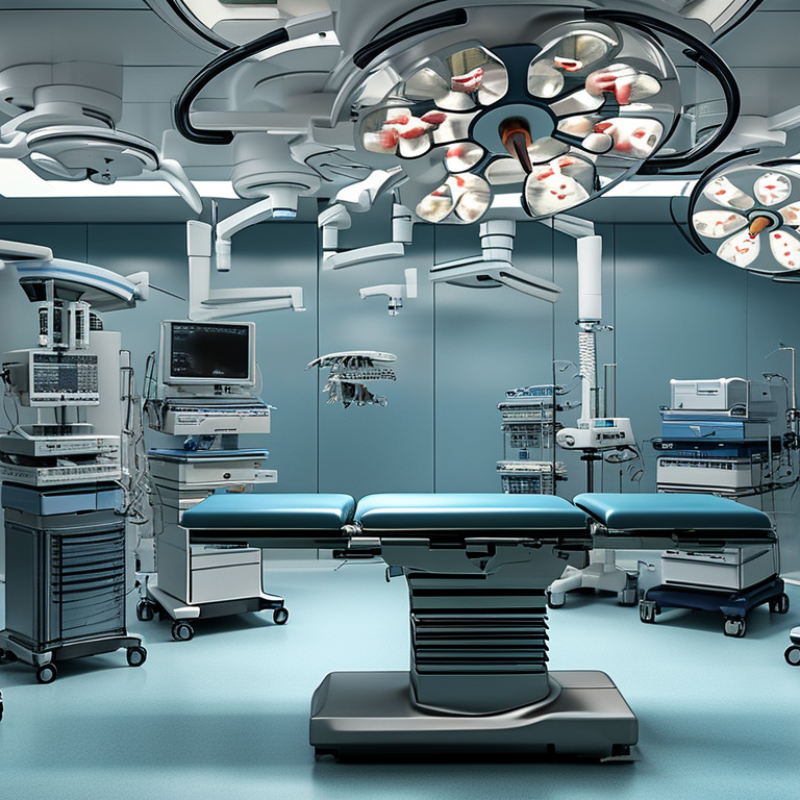
| Operating Tables |
Positioning patients for general, orthopedic, vascular, spinal, and minimally invasive procedures. |
Manual, electric, hydraulic, mobile, radiolucent, and specialty procedure tables. |
Safe working load, height range, longitudinal and lateral movement, accessory compatibility, radiolucency, cleanability, and emergency positioning. |
Electrical safety, mechanical safety, biocompatibility of patient-contact materials, electromagnetic compatibility where powered functions are included, and local medical-device registration. |
Large dimensional footprint; requires protected packaging, lift-gate delivery, installation, acceptance testing, and spare actuators or control components. |
Capital equipment purchase, framework contract, or turnkey operating-room project. |
Approximately 8–15 years with preventive maintenance. |
| Surgical Lights |
Shadow-reduced illumination of the operative field during open and minimally invasive surgery. |
Ceiling-mounted, wall-mounted, mobile, single-dome, and dual-dome systems. |
Illuminance, color rendering, color temperature, shadow management, sterile handle design, arm reach, heat control, and camera integration. |
Electrical safety, photobiological safety, electromagnetic compatibility, infection-control requirements, and installation compliance for ceiling-supported systems. |
Ceiling reinforcement, site survey, qualified installation, balancing, commissioning, and replacement of LED modules or control boards. |
Project procurement or equipment replacement program. |
Approximately 8–12 years; LED modules may require earlier replacement. |
| Electrosurgical Units |
Cutting, coagulation, desiccation, and vessel sealing in open and laparoscopic procedures. |
Monopolar, bipolar, advanced bipolar, vessel-sealing, and integrated generator systems. |
Output accuracy, tissue-response control, sealing performance, accessory availability, smoke evacuation integration, alarms, and compatibility with local power supply. |
Electrical safety, electromagnetic compatibility, high-frequency surgical equipment requirements, leakage-current control, and validated accessories. |
Compact shipping; requires compatible electrodes, return pads, cables, foot switches, and documented technical support. |
Generator purchase with recurring accessory procurement. |
Approximately 7–10 years; accessories are frequently replaced. |
| Surgical Suction and Irrigation Systems |
Removal of blood and fluids and delivery of irrigation solution during surgery. |
Portable suction pumps, central suction regulators, irrigation pumps, tubing sets, collection canisters, and integrated systems. |
Vacuum range, flow rate, noise level, overflow protection, bacterial filtration, canister capacity, tubing compatibility, and ease of cleaning. |
Electrical safety for powered pumps, fluid-path materials, infection prevention, pressure-control accuracy, and requirements for sterile or single-use components. |
Consumable tubing, filters, canisters, and seals must be continuously available; liquid-resistant packaging is important. |
Equipment purchase plus recurring consumables agreement. |
Approximately 5–8 years for pumps; consumables are single-use or regularly replaced. |
| Anesthesia Workstations |
Delivery of anesthetic gases, ventilation, monitoring, and breathing support during surgery. |
Integrated anesthesia machines, compact workstations, ventilator-based systems, and modular carts. |
Ventilation modes, gas-flow accuracy, vaporizer compatibility, battery backup, breathing-circuit configuration, alarm design, and service access. |
Gas-delivery safety, ventilator performance, electrical safety, electromagnetic compatibility, software controls, local gas-pipeline requirements, and calibration documentation. |
Requires site preparation, gas and electrical verification, installation, user training, preventive maintenance, and calibration tools. |
Capital purchase, managed equipment contract, or hospital-wide replacement project. |
Approximately 8–12 years with scheduled servicing. |
| Patient Monitoring Systems |
Monitoring of ECG, oxygen saturation, non-invasive or invasive blood pressure, temperature, respiration, and other parameters. |
Bedside monitors, transport monitors, modular monitors, central monitoring stations, and wireless connectivity modules. |
Parameter configuration, measurement accuracy, alarm management, screen visibility, network integration, battery performance, and data export. |
Electrical safety, electromagnetic compatibility, cybersecurity controls for connected devices, alarm requirements, software validation, and data-protection obligations. |
Requires compatible sensors, cables, batteries, mounts, software updates, network assessment, and local technical support. |
Per-unit purchase, multi-year fleet contract, or monitoring-system project. |
Approximately 5–8 years; sensors and batteries have shorter replacement cycles. |
| Laparoscopic and Endoscopic Systems |
Visualization and access for minimally invasive abdominal, thoracic, gynecological, urological, and other procedures. |
Camera heads, image processors, light sources, monitors, insufflators, scopes, and integrated towers. |
Image resolution, color reproduction, scope compatibility, insufflation stability, smoke management, sterilization method, recording, and integration with operating-room displays. |
Optical and electrical safety, reprocessing validation, sterilization compatibility, software and cybersecurity requirements, and local registration of reusable or powered components. |
Fragile optical components require shock protection; scopes need inspection, repair, leak testing, and reliable reprocessing workflows. |
System purchase with reusable instruments and recurring repair or service needs. |
Approximately 5–8 years for electronics; reusable scopes may have shorter repair cycles. |
| Surgical Instrument Sets |
Incision, dissection, grasping, clamping, suturing, retracting, and tissue handling in open surgery. |
General sets, specialty sets, modular trays, reusable instruments, and sterile single-use instruments. |
Material grade, surface finish, precision, jaw alignment, hinge durability, tray organization, sterilization compatibility, and traceability. |
Material biocompatibility, cleaning and sterilization validation, reusable-device labeling, packaging integrity for sterile products, and local medical-device requirements. |
High SKU complexity; requires standardized specifications, inspection sampling, tray maps, replacement planning, and reliable sterilization logistics. |
Bulk purchase, hospital standardization program, or replenishment contract. |
Approximately 5–15 years for reusable instruments, depending on use and reprocessing. |
| Orthopedic Power Tools |
Bone cutting, drilling, reaming, shaping, and fixation preparation in orthopedic and trauma surgery. |
Electric or battery-powered handpieces, drills, saws, reamers, consoles, and compatible attachments. |
Torque, speed range, vibration, thermal control, battery capacity, sterilization method, attachment precision, and ergonomic balance. |
Electrical or battery safety, electromagnetic compatibility, mechanical performance, sterilization validation, battery transport rules, and accessory compatibility. |
Battery shipping and storage require planning; handpieces need inspection, lubrication where applicable, sterilization, and scheduled overhaul. |
Capital equipment purchase with recurring batteries, blades, burs, and attachments. |
Approximately 5–8 years; cutting accessories are replaced more frequently. |
| Surgical Smoke Evacuation |
Capture and filtration of smoke and aerosols generated by electrosurgery, laser procedures, and tissue ablation. |
Portable units, integrated operating-room systems, local capture devices, tubing, filters, and pencil-mounted accessories. |
Capture efficiency, airflow, noise, filter capacity, alarm functions, tubing design, operating cost, and compatibility with electrosurgical equipment. |
Electrical safety, filtration performance claims, infection-control requirements, waste-handling rules, and local occupational-health requirements. |
Filters and tubing are recurring items; filter classification, replacement intervals, and disposal procedures should be documented. |
Equipment purchase or rental with recurring filter and tubing supply. |
Approximately 5–8 years; filters are replaced according to use and manufacturer instructions. |
| Sterilizers and Sterile Processing Equipment |
Decontamination, cleaning, packaging, sterilization, and release of reusable surgical instruments. |
Steam sterilizers, low-temperature sterilizers, washer-disinfectors, ultrasonic cleaners, drying cabinets, and sealing systems. |
Chamber capacity, cycle time, temperature and pressure control, load configuration, documentation, water quality, and validation support. |
Pressure-vessel safety, sterilization-cycle validation, infection-control standards, workplace safety, installation requirements, and local building or utility codes. |
Heavy equipment requires structural review, utility connections, drainage, ventilation, commissioning, validation, and ongoing consumables. |
Capital project, service contract, or capacity-expansion program. |
Approximately 10–15 years with validation and maintenance. |
| Surgical Lasers |
Cutting, vaporization, coagulation, ablation, and tissue treatment in selected surgical specialties. |
Wavelength-specific systems, fiber-delivery systems, articulated-arm systems, and mobile laser platforms. |
Wavelength, pulse or power control, tissue indication, delivery accessories, aiming beam, safety interlocks, plume control, and training requirements. |
Laser classification, optical radiation safety, electrical safety, electromagnetic compatibility, controlled-area requirements, protective eyewear, and operator training. |
Requires controlled transport, installation qualification, calibration, safety inspection, specialized accessories, and trained service personnel. |
Capital purchase, lease, or procedure-based service model. |
Approximately 7–10 years with regular calibration. |
| Surgical Navigation and Imaging Systems |
Real-time anatomical guidance for neurosurgery, spinal surgery, ENT procedures, orthopedic procedures, and other image-guided interventions. |
Optical tracking, electromagnetic tracking, intraoperative imaging, navigation workstations, and planning software. |
Tracking accuracy, registration workflow, imaging compatibility, software usability, operating-room footprint, data integration, and backup procedures. |
Electrical and electromagnetic safety, software lifecycle controls, cybersecurity, imaging-radiation requirements where applicable, data protection, and clinical-use authorization. |
High-value and sensitive equipment; requires site planning, calibration, software maintenance, staff training, and dependable technical response. |
Capital equipment project, lease, or integrated clinical technology contract. |
Approximately 5–8 years, often aligned with software and imaging upgrades. |
| Surgical Robotics and Robotic Assistance |
Computer-assisted manipulation, visualization, positioning, and instrument control for selected minimally invasive procedures. |
Multi-arm systems, instrument-positioning systems, camera-control systems, and procedure-specific robotic platforms. |
Clinical indications, system uptime, instrument range, haptic or motion-control features, training pathway, operating-room layout, and total cost of ownership. |
Medical-device authorization, software validation, cybersecurity, electrical and mechanical safety, sterile draping or instrument requirements, and operator training documentation. |
High capital cost, specialized installation, dedicated training, software updates, procedure-specific instruments, and strong service-level requirements. |
Capital purchase, lease, managed service, or utilization-based agreement. |
Approximately 7–10 years; software and instruments have shorter cycles. |
| Patient Warming and Temperature Management |
Prevention and treatment of perioperative hypothermia and management of patient temperature. |
Forced-air warming units, conductive warming systems, fluid warmers, warming blankets, and temperature probes. |
Temperature accuracy, control range, alarm performance, infection-control design, disposable compatibility, noise, and patient safety features. |
Electrical safety, thermal safety, biocompatibility of patient-contact materials, infection-control requirements, and validation of temperature control. |
Some systems depend on single-use blankets, hoses, probes, or warming cartridges; storage volume and replenishment must be planned. |
Device purchase with recurring single-use accessories. |
Approximately 5–8 years; patient-contact accessories may be single-use. |
| Operating-Room Furniture and Utility Systems |
Support of sterile workflow, instrument placement, equipment positioning, and operating-room organization. |
Back tables, Mayo stands, instrument trolleys, storage systems, ceiling pendants, utility columns, and equipment booms. |
Load capacity, maneuverability, corrosion resistance, cleanability, ergonomic height, brake performance, utility configuration, and floor or ceiling compatibility. |
Mechanical safety, electrical and gas-connection requirements for utility systems, infection-control design, fire safety, and local construction codes. |
Large or project-based shipments; may require room surveys, structural verification, installation, and coordination with construction schedules. |
Furniture purchase or operating-room construction and renovation project. |
Approximately 10–15 years, depending on usage and facility conditions. |