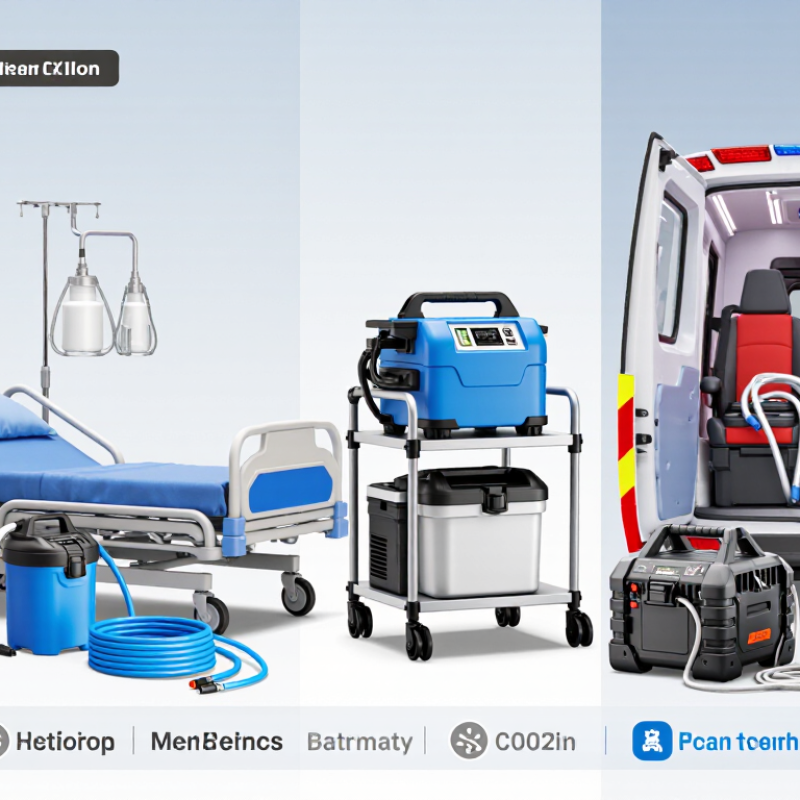
Choosing the best portable suction machine requires more than comparing prices, battery life, or container size. The right portable suction unit should match the patient’s airway needs, caregiver experience, and daily environment. A device used beside a bed may need different features from one carried in an ambulance or used during travel.
Respiratory-care expert Robert M. Kacmarek has offered a practical reminder: “The safest device is the one the caregiver can operate correctly, every time.” That principle matters when seconds feel crowded. Look for clear controls, dependable negative pressure, secure tubing, and an overflow protection system. Check whether the collection bottle can be removed without spilling secretions. A lightweight handle also helps when moving between rooms.
Battery performance deserves close attention. A machine may advertise several hours of operation, yet real use can shorten that time. Frequent suctioning, cold conditions, and an aging battery may reduce endurance. Test the unit before an urgent situation develops. Keep the charger, spare tubing, filters, and replacement canister together.
Noise is another practical concern. A loud motor can increase stress, especially for children or anxious patients. However, quiet operation should not replace sufficient suction performance. Ask a qualified healthcare professional to confirm the appropriate pressure range and accessories.
No checklist is perfect. I once overlooked connector compatibility, and the setup became useless. That small mistake changed how I evaluate portable suction equipment. The best choice is not always the smallest or newest model. It is the machine that remains reliable, cleanable, understandable, and ready when needed.
A portable suction machine is a compact medical device that removes mucus, saliva, blood, or other fluids from the mouth and airway. It uses a motor to create negative pressure inside a collection canister. When the catheter touches fluid, suction draws it through the tubing and into the sealed container.
It is not magic. The canister catches fluids, while a filter helps protect the pump from contamination. A pressure regulator controls suction strength, and a battery allows operation during transport or power failure. Some models include a pressure gauge, overflow protection, and rechargeable power. These details matter during real use, especially in vehicles, clinics, or homes with limited space.
When choosing the best portable suction machine, check its adjustable pressure range, airflow rate, battery duration, charging options, and total weight. A clear canister makes fluid levels easier to monitor. Smooth tubing connections reduce leaks, but they still require inspection before every use. Cleaning instructions should be simple, specific, and compatible with the included parts.
Do not select a device by price alone. Excessive suction may injure delicate tissue, while weak suction may fail when secretions are thick. That balance is easy to underestimate. A qualified healthcare professional should confirm the correct pressure, catheter type, and cleaning routine for the intended user. Read the manual carefully, because emergency operation can expose small design weaknesses. Test the battery and alarm before travel, not after a problem begins.
Suction capacity means more than maximum vacuum. Airflow, measured in litres per minute, determines how quickly secretions move through the tubing. Vacuum pressure, measured in mmHg or kPa, determines pulling force at the catheter. The 2022 American Association for Respiratory Care clinical practice guideline recommends limiting suction pressure to about −100 to −150 mmHg for adults, with lower limits for children and neonates.
Stronger pressure is not automatically safer.
It may irritate tissue or increase airway collapse risk.
Look for adjustable pressure, a visible gauge, and stable airflow under load. A machine showing −600 mmHg on an empty tube may perform poorly after mucus, a filter, and a narrow catheter are added. That detail is easy to miss.
ISO 10079-1:2015 defines safety and performance expectations for medical suction equipment, but it does not select one ideal setting for every patient. The right capacity depends on use. Oral and emergency suction may benefit from higher airflow, while airway care needs controlled pressure and gentle regulation.
A practical test uses water and a clinical-size catheter, then checks recovery time after blockage.
I would also test the unit with a nearly full collection bottle. Performance often changes there.
Manufacturer claims should be compared with measured airflow, working vacuum, battery duration, and alarm response, not maximum figures alone.
WHO procurement guidance also emphasizes validated gauges, overflow protection, and dependable operation during transport. Small controls matter.
Choosing a portable suction machine starts with the patient, not the catalogue. AARC clinical guidance recommends assessing secretion thickness, cough strength, airway type, oxygenation, and patient response. The WHO and UNICEF Global Report on Assistive Technology estimates that more than 2.5 billion people need assistive products worldwide. That need may exceed 3.5 billion by 2050. The figures are broad, but they show why one device cannot fit every care setting.
For a tracheostomy patient with thick secretions, prioritize adjustable negative pressure, a clear canister, and tubing that resists kinking. Oral suction after surgery may require lighter weight and faster cleaning. Pediatric patients need gentler, clinician-prescribed pressures and smaller catheters. Ask how often suctioning occurs. Ask who will operate it. Family caregivers may need simple controls, clear alarms, and reliable battery runtime. Small details matter.
During transport, verify battery endurance, charging options, filter protection, and secure storage. In a clinic, check continuous-duty performance and canister capacity. Do not choose by maximum vacuum alone. AARC guidance also stresses assessment before and during suctioning. I would test the machine while wearing gloves. Buttons can feel different under pressure. Published specifications rarely show noise, cleaning fatigue, or caregiver confidence. Record those observations during a real trial, then let the responsible clinician confirm settings and accessories.
Choosing the Best Portable Suction Machine
Battery performance affects safety, comfort, and daily independence. Compare usable runtime, not only the advertised battery life. Runtime may change with suction pressure, frequency of use, temperature, and battery age. A clear battery indicator helps prevent surprises. Look for dependable charging options, such as household and vehicle charging, when appropriate. A removable battery can be useful during long trips. However, spare batteries add weight and require careful storage.
Size and weight should match the user’s real routine. Measure the storage space beside the bed or inside a travel bag. A compact unit may be easier to carry, but an extremely small design can limit container capacity or controls. Check the handle, case, tubing storage, and stability on uneven surfaces. I once focused too much on weight and overlooked awkward cables. That was a poor comparison. Small details matter.
Noise is another practical concern, especially during nighttime care. Compare published decibel ratings, but check how and where the measurement was taken. A low number may not reflect noise from vibration, airflow, or alarms. Test the machine at the distance where it will actually operate. Portability also includes quick setup, readable controls, secure connectors, and simple cleaning access. A reliable device should feel manageable under stress, not merely convenient in a product photo. Ask a qualified healthcare professional to confirm that the suction level and equipment type suit the intended user.
Choosing a portable suction machine requires more than checking airflow and battery life. Safety features deserve close attention. Look for clear pressure controls, a readable vacuum gauge, stable tubing connections, and alarms for blocked lines or full collection jars. The device should remain steady on a bedside table or vehicle surface. A backup battery indicator is useful during transfers, although indicators can sometimes be misleading.
Cleaning should fit the user’s real routine. Removable jars and smooth tubing reduce hidden residue. Check whether the collection container, lid, filter, and tubing can be replaced easily. Follow the manufacturer’s cleaning instructions, and never reuse single-use components unless they are specifically approved for reuse. I would inspect the tubing after every use. Small cracks are easy to miss. This is where my own checking could be better.
Accessories must support safe handling, not create clutter. A carrying case, spare battery, charger, replacement filters, and correctly sized catheters may be practical additions. Keep emergency supplies in a labeled pouch. Maintenance includes testing the machine before travel, charging the battery fully, checking seals, and recording filter changes. Have a qualified healthcare professional confirm pressure settings and accessory compatibility. A machine can appear powerful while performing poorly because of a loose lid or clogged filter. Noise, weak suction, or repeated alarms should prompt a careful inspection and professional service.
Get the instant quotes from our sales representatives!
HEMC (Hospital Equipment Manufacturing Company) was established in the year 1981 and has since been engaged in the export of Medical equipments, Hospital equipments, Orthopaedic Implants & instruments, Laboratory equipments, Scientific & Educational products worldwide. Your support has made us a "Government of India" recognised export house. Our goods have reached all continents from "The Americas" to "Europe" and beyond…