Chat with us, powered by LiveChat

Why Choose Wall Mount Exam Light China Suppliers?

Choosing the right Wall Mount Exam Light China supplier can influence examination quality, purchasing risk, and long-term maintenance costs. Clinics need more than bright illumination. They need stable color rendering, controlled shadows, smooth arm movement, and dependable heat management. A light positioned above a treatment couch should illuminate skin tones clearly without forcing clinicians to adjust it repeatedly.

Industry evidence supports this focus. Grand View Research’s Medical Lighting Market Size, Share and Trends Analysis Report, 2024, identifies energy efficiency, LED adoption, and improved clinical visibility as major market drivers. The report also highlights demand for compact lighting systems in hospitals, outpatient centers, and specialty clinics. These trends make wall-mounted examination lights practical where floor space is limited. Every square meter matters.

China has a deep medical-device manufacturing base, offering broad LED components, optical engineering, metal fabrication, and assembly capabilities. The China Medical Device Industry Development Report has repeatedly described medical devices as a growing and increasingly sophisticated manufacturing sector. However, lower pricing alone does not prove supplier quality. That assumption is incomplete. Buyers should request ISO 13485 certification, IEC 60601-1 test evidence, photometric data, EMC documentation, and traceable quality records. Requirements vary by destination market, so verification remains essential.

Experienced suppliers can provide adjustable color temperature, high CRI performance, sealed surfaces, and replacement parts. They may also support private labeling and installation guidance. Still, communication gaps can delay approvals or create unsuitable specifications. A careful supplier audit, sample evaluation, and documented warranty review reduce these weaknesses. The strongest Wall Mount Exam Light China partnerships combine competitive manufacturing with transparent evidence, responsive engineering, and realistic after-sales support. Reliability is built through details, not promises.
Why Choose Wall Mount Exam Light China Suppliers?

What Is a Wall-Mounted Examination Light?

Why Choose Wall Mount Exam Light China Suppliers?

What Is a Wall-Mounted Examination Light?

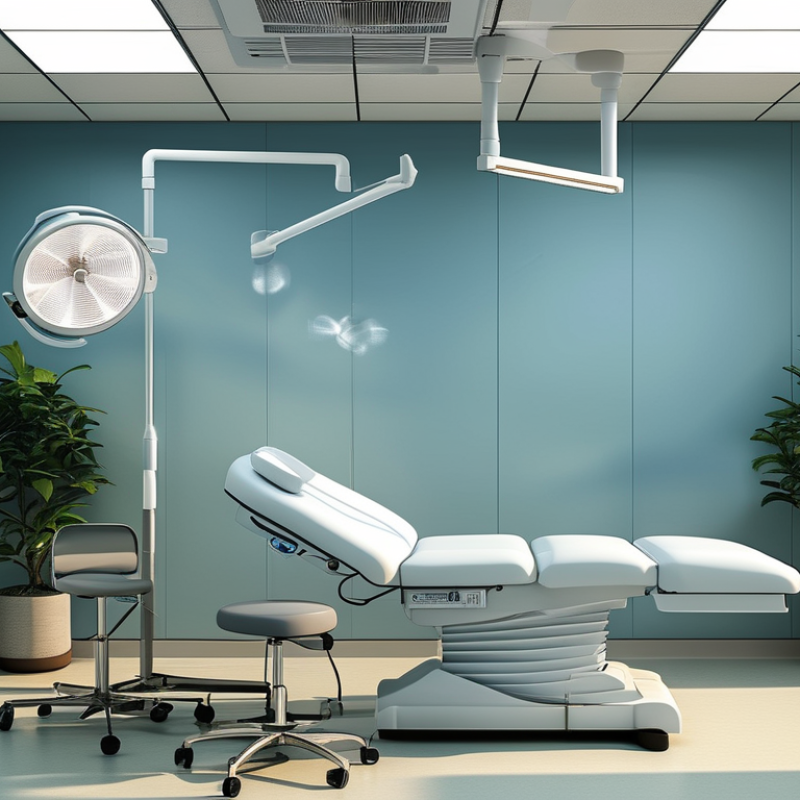
A wall-mounted examination light is a clinical fixture attached directly to a wall or medical rail. Its articulated arm brings focused illumination over a patient’s wound, ear, skin, or treatment area. Unlike ceiling lights, it saves floor space and reduces obstacles beside the examination chair.

Many models provide adjustable intensity, color temperature, and beam direction. Medical staff can move the lamp with one hand. That detail matters during fast examinations. The fixture should also offer shadow reduction, low heat, and smooth, disinfectant-resistant surfaces. IEC 60601-2-41 provides safety requirements for luminaires used in surgical and diagnostic environments.

Lighting performance deserves careful checking. The Illuminating Engineering Society recommends task lighting suited to clinical visual work, while EN 12464-1 identifies 1,000 lux as a reference level for some examination tasks. However, more brightness is not always better. Glare can tire clinicians and disturb patients. I have seen specifications look impressive, yet the real beam felt uneven. That gap needs honest testing.

Tips: Ask suppliers for measured lux data at the working distance, not only maximum output. Request photometric files, cleaning compatibility, arm-cycle testing, and electrical safety documents. The World Health Organization’s 2022 global infection prevention report links effective IPC programs with substantial reductions in healthcare-associated infections. Therefore, sealed joints and cleanable housings are practical priorities, not decorative features. MarketsandMarkets also projects continued growth in the medical lighting market, reflecting rising demand for efficient clinical equipment. Supplier experience still matters more than a polished catalogue.

What Features Should Buyers Evaluate?

Buyers evaluating wall mount exam light China suppliers should begin with the light’s clinical performance, not its appearance. Check illuminance at the working distance, color rendering, beam uniformity, and shadow control. A bright lamp is not automatically a good lamp. Ask for measured data under realistic examination conditions, rather than relying on catalog claims.

Mechanical design deserves equal attention. Examine the arm’s reach, movement resistance, mounting plate, and cable protection. The lamp should stay positioned without drifting during a procedure. Touch controls, sealed surfaces, and easy-to-clean handles can reduce daily workload. Confirm the light source’s expected service life and heat management. Excessive heat near the patient can become uncomfortable. It may also reveal weak thermal design. I would request samples or video demonstrations before placing a large order. Photos rarely show stiffness, noise, or awkward adjustment.

Supplier reliability requires more than a low quotation. Evaluate production experience, inspection procedures, spare-part access, packaging quality, and response time. Request test reports, installation instructions, warranty terms, and documentation for the destination market. Check whether specifications remain consistent between samples and mass production. Small mismatches matter. A supplier that explains limitations honestly may be safer than one promising perfection. Buyers should also clarify voltage, plug configuration, wall structure requirements, and training support. In practice, installation details are often underestimated. That is where avoidable delays begin.

Why Choose Wall Mount Exam Light China Suppliers? - What Features Should Buyers Evaluate?

Evaluation Dimension Practical Reference Data Why It Matters for Buyers What to Verify with the Supplier
Illuminance 30,000–100,000 lux
Measured at a specified working distance, commonly 0.5–1.0 m.
Adequate illuminance helps clinicians inspect skin, wounds, oral areas and other examination fields without relying only on ambient room lighting. Request a test report stating the measuring distance, measurement method, light-field diameter and whether the value is central or average illuminance.
Color Rendering CRI (Ra) ≥ 90
A higher R9 value is useful when evaluating saturated red tones such as blood and tissue.
Good color rendering supports more reliable visual assessment of tissue color, skin tone and wound condition. Check independent or laboratory data for Ra and, where available, R9. Do not rely only on a general “high CRI” statement.
Color Temperature 3,500–5,000 K
Adjustable color temperature can provide greater flexibility for different examination environments.
A neutral white light can improve visual comfort and help maintain consistent color perception during examinations. Confirm the available range, adjustment method, color-temperature tolerance and whether changing the setting affects illuminance or CRI.
Shadow Control Multi-LED optical design with a uniform light field and reduced shadowing. Reduced shadows make it easier to view recessed or partially obstructed examination areas. Request beam-pattern images or photometric data. Ask how the lamp performs when an operator’s hand or instrument enters the light path.
Light-Field Size Typically adjustable or designed for an examination field of approximately 100–250 mm at the rated working distance. A suitable field size concentrates light on the examination area while reducing unnecessary glare around it. Verify field diameter at the stated distance and whether the field remains uniform from the center to the edge.
Arm Reach and Movement Common wall-mounted configurations provide approximately 0.8–1.5 m of horizontal reach, depending on the arm design. Sufficient reach allows the lamp to cover examination chairs, beds and treatment areas without moving the patient. Confirm the maximum reach, vertical travel, rotation range, folded depth and whether the arm remains stable in all operating positions.
Mounting Requirements A reinforced wall or suitable mounting structure is required. Electrical input commonly includes 100–240 V AC for global configurations. Correct structural and electrical preparation reduces installation risk and prevents movement, vibration or electrical incompatibility. Obtain the mounting template, fixing-point dimensions, total product weight, recommended wall construction and input-voltage specification.
Controls and Usability Touch, membrane, handle or wall-control options; dimming is commonly available on professional examination lights. Easy-to-clean controls and smooth adjustment help staff position the light quickly while maintaining workflow and hygiene. Check dimming steps, control location, tactile feedback, accidental-activation protection and compatibility with gloved operation.
Heat and Patient Comfort LED light sources generally produce less radiant heat than traditional halogen sources, but the lamp head still requires thermal management. Lower heat near the patient and clinician improves comfort during longer procedures and helps protect sensitive examination areas. Ask for operating-temperature data, thermal test results, ventilation design and the expected surface temperature after continuous operation.
Ingress Protection and Cleaning A smooth, sealed lamp head is preferable; the required IP rating depends on the clinical environment and cleaning process. Surfaces that tolerate routine disinfection help support infection-control procedures and extend product service life. Verify the IP rating, approved disinfectants, cleaning instructions, material compatibility and whether seams or vents are difficult to clean.
Electrical and Product Safety Select products tested to applicable medical electrical safety requirements, such as IEC 60601-1 where relevant to the intended use. Documented safety testing helps buyers assess protection against electrical, mechanical and thermal hazards. Request the applicable conformity documents, test reports, risk-management records and details of the exact model covered by each document.
Flicker and Visual Comfort Prefer stable output with documented flicker performance, especially when dimming or using cameras and video systems. Low-flicker operation can reduce visual discomfort and prevent unwanted banding or interference in recorded clinical images. Ask for flicker test data at full and minimum brightness, including the test method and operating conditions.
LED Service Life Many quality LED modules are specified around 40,000–60,000 operating hours, subject to temperature and operating conditions. A long-rated life can reduce relamping frequency, maintenance interruptions and ownership costs. Check whether the rating refers to LED lumen maintenance or total product life, and request the stated test standard and thermal conditions.
Quality Control and Traceability Documented incoming inspection, assembly checks, electrical testing and final performance testing. A repeatable quality system is important when buyers need consistent performance across multiple shipments. Review sample inspection records, serial-number or batch traceability, calibration records and the supplier’s process for handling nonconforming products.
Customization and Export Support Possible variations include plug type, input voltage, wall bracket, arm length, controls, packaging and documentation language. Localized configurations can simplify installation, regulatory review and integration into different healthcare facilities. Confirm minimum order quantity, sample policy, engineering-change control, spare-parts availability, export packaging and after-sales response time.
Total Cost of Ownership Evaluate purchase price together with installation, freight, maintenance, warranty coverage, spare parts and expected energy consumption. The lowest initial quotation may not provide the lowest long-term cost if installation or replacement parts are expensive. Request a complete quotation with Incoterms, warranty terms, replacement-part prices, service scope, lead time and estimated maintenance requirements.

Buyer reference: Performance ranges are common evaluation benchmarks rather than universal requirements. Final specifications should be selected according to the intended clinical application, local regulations, installation conditions and applicable medical-device standards.

Why Choose Wall-Mounted Exam Light Suppliers in China?

Why Choose Wall-Mounted Exam Light Suppliers in China?

Wall-mounted exam light suppliers in China offer practical value for clinics, laboratories, and outpatient rooms. Grand View Research estimated the global medical lighting market at about USD 1.2 billion in 2023. Its report also expects steady growth through 2030, driven by LED adoption and energy efficiency. Chinese manufacturers often provide adjustable arms, focused beams, high color rendering, and compact mounting designs. These features help clinicians examine skin tone, tissue detail, and wound changes more clearly.

In my experience, supplier evaluation should go beyond price. A reliable factory should explain illuminance, color rendering index, working distance, arm durability, and heat control. It should also provide ISO 13485 quality-management evidence and applicable IEC 60601 safety documentation. The International Energy Agency reports that LED lighting can use substantially less electricity than traditional lighting. That matters in busy examination rooms. However, a lower quotation is not always a saving. I once overlooked the stiffness of an arm joint, and daily repositioning became frustrating. Small mechanical details deserve more attention.

Tips: Request a sample or live video test. Check the light at different angles. Ask for photometric data, warranty terms, installation drawings, and spare-part availability. Compare shadow control, not only brightness. A 2024 medical-device industry survey also highlights traceability and after-sales responsiveness as important supplier-selection factors. Some factories communicate slowly. That weakness should be tested before ordering.

Why Choose Wall-Mounted Exam Light Suppliers in China?

Representative performance benchmarks commonly specified for LED wall-mounted examination lights

China-based suppliers commonly offer wall-mounted examination lights with high illumination, long LED service life, high color-rendering performance, and adjustable color temperature. These specifications support accurate clinical observation while allowing buyers to compare configurations, certifications, customization options, and production capacity in one manufacturing market.

How Do Chinese Suppliers Support Customization and Quality Control?

Choosing a wall mount exam light from China can make customization more practical and measurable. Experienced suppliers adjust illuminance, color temperature, color rendering, arm reach, and mounting dimensions. A clinic may need 50,000 lux, a neutral 4,500K tone, or a narrow wall plate. Suppliers can convert these requests into drawings, samples, and inspection checkpoints.

Quality control must follow the product, not merely the quotation. The WHO Global Patient Safety Report 2024 states that one in ten patients experiences harm during healthcare. It also estimates that more than half of this harm is preventable.

Chinese manufacturers can reduce risks through incoming-material checks, optical testing, electrical safety testing, aging tests, and batch traceability. ISO’s Survey 2023 recorded more than 38,000 ISO 13485 certificates worldwide, showing the scale of medical-device quality systems. Buyers should still verify each certificate and its scope.

Request calibrated photometric reports, IEC 60601 test evidence, inspection records, and sample approval documents. Factory records should identify operators, instruments, dates, and failed results. A sample can look perfect while production consistency remains uncertain.

Customization is not always an advantage. Too many changes can complicate validation, spare parts, and staff training. That limitation deserves honest discussion.

What Should Importers Consider Before Placing an Order?

Why Choose Wall Mount Exam Light China Suppliers?

What should importers check before ordering a wall mount exam light from China? Begin with the clinical requirement, not the catalog image. Confirm illuminance, color temperature, shadow control, arm reach, and adjustment force. A lamp that looks suitable online may feel unstable beside an examination table. Ask for test reports, photometric data, and clear drawings showing mounting dimensions.

Electrical compatibility needs careful review. Verify input voltage, frequency, plug type, power consumption, and protection features for the destination market. Request applicable compliance documents and confirm that they match the exact model ordered. Do not rely on a certificate copied from another product. Small details matter, including cable length and switch location.

Sample evaluation should include repeated movement, cleaning, heat, and installation time. Ask whether replacement light modules, control parts, and screws remain available after delivery. Packaging also deserves attention; a damaged joint can appear only after a long shipment. A pre-shipment inspection can check illumination, movement, labels, and carton condition. It adds cost.

Communication quality is another practical test. Reliable suppliers answer technical questions with measurements, drawings, and written records. Vague promises are warning signs. Importers should compare lead times, minimum order quantities, warranty terms, and after-sales procedures. Even careful sourcing can miss something. A small trial order may reveal problems that a polished quotation hides.

TOP