Top Wall Mounted Batteries for Home Energy Storage
A wall mounted battery can turn stored electricity into practical backup for a home. Mounted on a garage or utility-room wall, it may save floor space and keep equipment close to an inverter. But the best choice depends on the home, not a ranking alone. A compact unit might suit evening use, while a larger system may better support longer outages or higher demand.
This guide compares leading options by usable capacity, continuous power, battery chemistry, inverter compatibility, monitoring tools, warranty terms, and installation requirements. Those details matter more than headline capacity alone. For example, a battery’s backup output may not run every appliance at once. Check the manufacturer’s specifications, and ask a qualified installer to assess wiring, ventilation, mounting strength, and local conditions. Small details count.
We also consider how clearly each brand explains system limits and service support. Product data can change, and performance varies with temperature, installation, and household use. No single model fits every home. A careful comparison should weigh upfront cost against usable energy, expected backup needs, and future expansion. It is worth admitting that published figures do not tell the whole story; actual results can differ. Use this overview as a starting point, then confirm current specifications and compatibility before choosing a system.
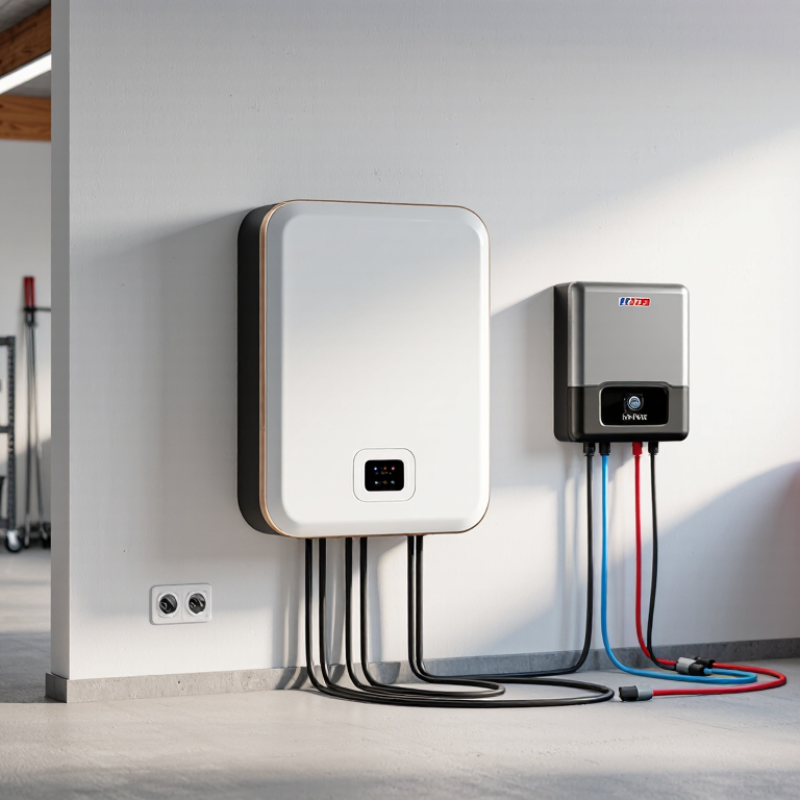
How Wall-Mounted Batteries Store Energy for Home Use
A wall-mounted home battery stores electricity for later use; it does not generate power. When rooftop solar makes more than the home needs, a compatible inverter can send surplus electricity to the battery. Inside, electrochemical cells store that energy. A battery management system monitors temperature, voltage, and current to help keep operation within safe limits. The unit is quiet, but it still needs suitable conditions.
After sunset, the system can release stored energy for household use. An inverter converts the battery’s direct current into the alternating current used by most home appliances. During a grid outage, backup power is available only if the system is configured for it. Runtime depends on battery capacity and which circuits are connected. A refrigerator, lights, and router may run for hours; heating equipment can draw far more. Wall mounting saves floor space, though the wall must support the unit and its required clearances.
Tips: Check which appliances the system can support, not just its stated capacity. Keep the battery within its specified temperature range, and have a qualified installer assess the wall, wiring, and backup setup. Actual results may vary.
Top Wall Mounted Batteries for Home Energy Storage - How Wall-Mounted Batteries Store Energy for Home Use | Battery Configuration | Typical Chemistry | Nominal Capacity | Typical Usable Capacity | Typical Continuous Output | Typical Round-Trip Efficiency | Common Home Use |
| Compact wall-mounted unit | Lithium iron phosphate (LFP) or lithium nickel manganese cobalt oxide (NMC) | About 5 kWh | About 4–5 kWh, depending on the permitted depth of discharge | About 2–5 kW | About 85–95% | Shifting a portion of daytime solar generation to evening use or supporting selected household circuits. |
| Mid-size wall-mounted unit | Commonly LFP or NMC | About 10 kWh | About 8–10 kWh, depending on system settings | About 3–7 kW | About 85–95% | Storing surplus solar energy for evening loads and providing limited backup when configured with a compatible inverter and transfer equipment. |
| Large single-unit system | Commonly LFP or NMC | About 13–15 kWh | About 10–15 kWh, depending on usable-capacity limits | About 4–10 kW | About 85–95% | Extending household energy coverage during peak-rate periods or outages; actual backup loads depend on inverter power and installation design. |
| Modular multi-battery system | Often LFP; chemistry depends on the system | Commonly 10–30+ kWh total | Varies by battery count, depth-of-discharge setting, and system design | Combined output depends on the batteries and inverter configuration | About 85–95% | Scaling storage capacity to match higher household consumption, larger solar systems, or longer backup needs. |
| AC-coupled wall-mounted system | Usually LFP or NMC | Commonly about 5–15 kWh per unit | Specified by the system; may be lower than nominal capacity | Limited by the battery inverter’s continuous output rating | Often about 85–90% for the complete AC-to-AC storage path | Adding storage to an existing solar installation; energy is converted between AC and DC during charging and discharging. |
| DC-coupled wall-mounted system | Usually LFP or NMC | Commonly about 5–15 kWh per unit | Specified by the system; may be lower than nominal capacity | Limited by battery, inverter, and system power ratings | Often about 90–95% for the DC-coupled storage path | Pairing storage with a compatible solar inverter; solar energy can be stored without first being converted to AC. |
| Typical ranges are indicative, not specifications for a particular product. Actual capacity, output, efficiency, cycle life, backup capability, and wall-mounting requirements vary by battery, inverter, temperature, installation, and operating settings. A battery stores electricity as chemical energy and supplies it later through a compatible inverter; stored energy is not the same as continuous power. |
Key Features That Distinguish Wall-Mounted Battery Systems
A wall-mounted battery can free up floor space, but its shape is only the start. Compare usable capacity with continuous output: a unit may store enough energy for evening use yet struggle to run a kettle and heating equipment together. Check surge ratings too. Startup loads can briefly exceed normal demand.
Battery chemistry, temperature control, and the battery management system affect day-to-day operation. Look for clear limits on operating temperature and charging conditions. A garage that drops close to freezing may need different protection from a warm utility room. Safety features matter. So does service access. A tightly packed installation can make inspection awkward.
Compatibility is another defining feature. Confirm that the battery works with the home’s inverter, solar equipment, and backup circuits, rather than assuming that similar connectors guarantee a match. Review expansion limits, warranty terms, and whether backup power switches automatically during an outage. I would also check the mounting surface and required clearances before comparing prices. That part is easy to overlook. Specifications can sound reassuring, though real household loads rarely follow a neat daily pattern. A little spare capacity may be useful, but oversized storage can sit unused for much of the year.
Top Wall-Mounted Batteries for Home Energy Storage
Top wall-mounted batteries for home energy storage are not simply the units with the largest capacity. A suitable choice depends on which circuits you want to keep running, how long outages usually last, and whether solar panels will recharge the battery. A refrigerator, a few lights, and a router need less stored energy than whole-home heating or cooking. Check both usable capacity and continuous power output; they measure different things.
Wall mounting can free floor space in a garage or utility room. It also makes location important. A solid wall, adequate clearance, suitable temperature, and easy access for inspection all matter. Follow the installation requirements and have a qualified professional assess the mounting surface and electrical setup. Small details count. A battery placed beside a hot appliance may not be in an ideal environment.
Compare backup capability, expansion options, monitoring, warranty terms, and expected performance over time. Ask whether the system can operate during a grid outage, since some setups need additional equipment to provide backup power. It is tempting to choose extra capacity “just in case,” but unused storage can add cost without solving a real need. Home energy patterns change, too, so estimates are never perfect. Start with recent electricity use and identify the essential loads you truly want powered.
Installation, Safety, and System Compatibility
A wall-mounted battery can save floor space, but installation details matter. Choose a solid wall that can support the unit’s weight, including its mounting hardware. Keep the battery away from direct sunlight, standing water, and heat sources. Leave the clearances specified in its installation guide. A cramped corner may look tidy, yet it can restrict cooling and service access. It is easy to underestimate that trade-off.
System compatibility deserves equal attention. Check that the battery’s voltage, inverter requirements, and communication method match the existing equipment. Confirm usable capacity and continuous power against the appliances you expect to run during an outage. A battery may store plenty of energy but still be unable to start a pump or support several large loads at once. Have a qualified installer review the wiring, protective devices, mounting surface, and applicable local requirements before work begins. The details can be less straightforward than a product chart suggests.
Tips: Photograph the existing equipment labels before requesting a compatibility check. Keep the installation manual and shutdown instructions near the system. Ask where the battery’s disconnect is, and make sure household members can reach it safely.
How to Choose a Battery for Your Household Needs
Choosing a wall-mounted battery starts with the loads you need to keep running, not the largest capacity on the shelf. List essentials such as the refrigerator, Wi-Fi router, lights, and medical equipment, then check their running and startup power. A refrigerator may draw little on average but briefly needs extra power when its compressor starts. That detail matters. Also compare usable capacity, continuous output, and backup duration; advertised capacity alone does not tell you how long a system will last.
The U.S. Energy Information Administration reports that residential customers used an average of 10,791 kWh in 2022, or about 29.6 kWh per day. Your home may differ sharply, so use utility bills and, if possible, circuit-level monitoring rather than relying on that national average. NREL’s 2024 Annual Technology Baseline uses about 85% round-trip efficiency for lithium-ion storage, meaning some stored energy is lost during charging and discharge. Leave room for that loss. I still find outage planning easy to misjudge: a battery sized for evening use may not cover an overnight heating system. Check the battery’s usable capacity, inverter output, indoor temperature range, and whether your planned solar setup can recharge it after a cloudy day.
