How to Choose the Right TRIzol Reagent in 2026?
Choosing the right Trizol reagent in 2026 starts with the sample, not the label. A fragile cell pellet, a fibrous tissue, and a small-volume biopsy can behave very differently during lysis. Consider the target molecule, sample type, expected yield, and downstream assay before comparing products. Check the current manufacturer’s instructions, compatibility notes, and safety data sheet; formulations and recommendations may change.
The method has a strong scientific foundation. In their 1987 paper, Piotr Chomczynski and Nicoletta Sacchi wrote, “A single-step method for RNA isolation by acid guanidinium thiocyanate-phenol-chloroform extraction is described.” That work explains the extraction principle, but it does not make every modern reagent interchangeable. Small details matter. A pellet left partly dry, an inaccurate reagent-to-sample ratio, or careless phase separation can affect RNA quality and consistency. Keep records of sample mass, reagent volume, and observed phase boundaries.
This guide will compare practical selection factors, including sample compatibility, workflow needs, and quality checks. It will also flag trade-offs that product labels may not make obvious. Yet no checklist can replace a pilot run with representative samples. That is the slightly inconvenient part. A reagent may look ideal on paper and still perform unevenly in your hands, especially with difficult tissues. Treat the choice as an evidence-based starting point, then verify it with your own controls.
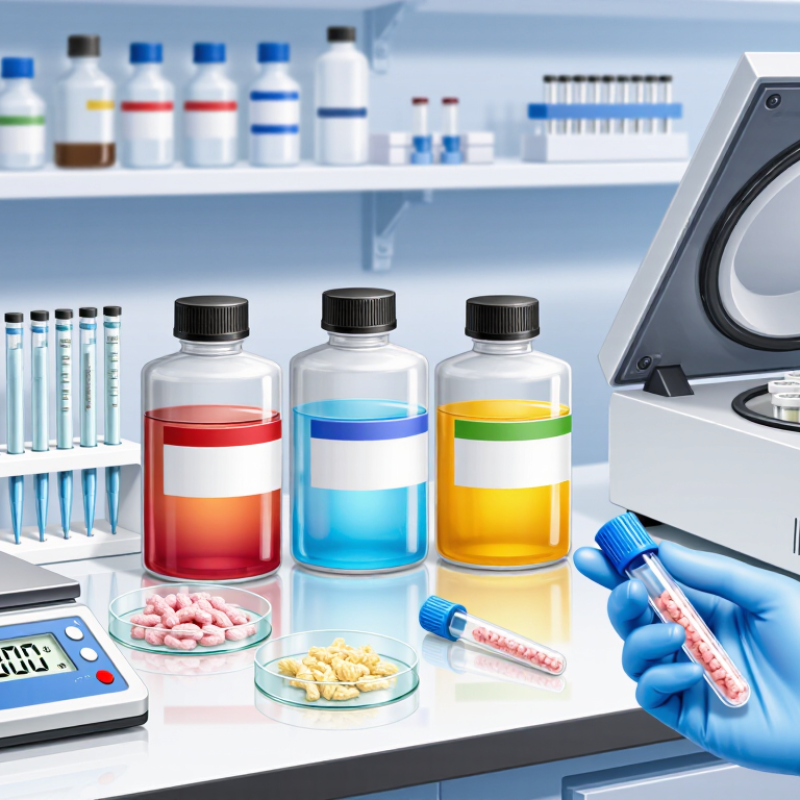
Choose by Sample Scale: Invitrogen Recommends 1 mL per 5–10×10⁶ Cells
How to Choose the Right TRIzol Reagent in 2026?
For cultured cells, match reagent volume to the number of cells, not just the size of the tube. A common starting point is 1 mL for every 5–10 million cells. For example, a pellet of about 8 million cells generally fits within that range. If your sample is larger, split it into manageable portions rather than forcing it into one small volume. Even mixing matters. An overloaded sample may not lyse evenly, which can affect RNA recovery and consistency. This guideline is useful, but it is not a guarantee; cell type and sample condition can change the amount needed.
Tips: Count cells before harvesting when practical, and record the count and reagent volume for each batch. Keep the lysate uniform. Small details help.
For tissue, plant material, or unusually dense cell pellets, do not apply the cell-based ratio blindly. Use the relevant protocol’s sample-to-reagent guidance, and check that the material is fully dispersed before continuing. If results vary between runs, review the input amount, homogenization, and handling steps together. The volume alone may not explain the difference.
Match the Reagent to RNA, DNA, or Protein Recovery Needs
Match the extraction reagent to the material you need to recover, not just the sample type. For RNA, choose a formulation and protocol designed to preserve total RNA and support clean separation of the aqueous phase. Tissue, cultured cells, and plant material can behave differently. Tough or fatty samples may need extra attention during homogenization. Keep the sample cold and avoid carrying debris into the next step.
For DNA, confirm that the instructions support DNA recovery from the interphase or organic phase. The amount and quality can vary with sample composition and handling. If you need intact genomic DNA, check whether the protocol suits your downstream analysis. Small details matter. A reagent that works well for RNA is not automatically the best choice for DNA.
Protein recovery requires a compatible protocol for the organic phase and precipitation steps. Consider whether the resulting protein preparation fits your assay; residual solvent or salts may interfere with measurement. Read the full workflow before buying, including phase separation, wash steps, and storage guidance. I would not assume one reagent performs equally well for all three targets. In practice, sample-specific results can still surprise you, so pilot a small batch when the material is unfamiliar.
How to Choose the Right TRIzol Reagent in 2026? - Match the Reagent to RNA, DNA, or Protein Recovery Needs
| Recovery Goal | Typical Fraction | When This Route Fits | Key Considerations | Common Downstream Uses |
| RNA only | Aqueous phase after phase separation | Choose this route when RNA is the main target and DNA or protein recovery is not required. | Keep the aqueous phase separate from the interphase. Remove residual phenol and salts during cleanup; assess RNA concentration, purity, and integrity before use. | Reverse transcription, RT-qPCR, RNA sequencing, and other RNA-based assays. |
| RNA and DNA | RNA: aqueous phase
DNA: interphase and organic phase | Useful when both nucleic-acid types are needed from the same homogenized sample. | DNA recovery requires additional precipitation and washing steps. Residual DNA in an RNA preparation can affect some assays; use DNase treatment when appropriate. | RNA expression analysis alongside genomic DNA analysis or genotyping. |
| RNA and protein | RNA: aqueous phase
Protein: organic phase | Suitable when RNA and protein measurements are planned from the same sample. | Protein recovery from the organic phase requires additional precipitation and washing. The resulting protein preparation may need extra cleanup or compatibility testing for the intended assay. | RNA expression studies paired with protein analysis, subject to assay compatibility. |
| RNA, DNA, and protein | RNA: aqueous phase
DNA: interphase and organic phase
Protein: organic phase | Choose this sequential recovery approach when preserving multiple molecular fractions from one sample is important. | Each fraction has separate recovery steps, and yield or quality can vary with sample type and handling. Follow a validated protocol for the specific input material. | Multi-analyte studies where nucleic-acid and protein results are compared across the same sample. |
| RNA from a challenging sample | Usually the aqueous phase, followed by appropriate cleanup | Consider a compatible workflow for samples rich in RNases, lipids, polysaccharides, or other interfering material. | Sample disruption, input amount, homogenization, and cleanup can strongly affect RNA quality. Check the protocol’s compatibility with the tissue or cell type before processing. | Downstream RNA applications that require intact, sufficiently pure RNA. |
Selection and safety note: TRIzol-type phenol–guanidinium reagents can support sequential recovery of RNA, DNA, and protein, but the appropriate route depends on the sample and intended assays. Follow the reagent’s validated protocol and institutional safety procedures; phenol is corrosive, and phase-separation workflows may involve hazardous solvents.
Compare RNA Precipitation: Use 0.5 mL Isopropanol per 1 mL TRIzol
How to Choose the Right TRIzol Reagent in 2026?
Compare RNA Precipitation: Use 0.5 mL Isopropanol per 1 mL TRIzol
For many routine samples, start with 0.5 mL isopropanol for every 1 mL of TRIzol reagent. This established proportion is described in the single-step extraction method by Chomczynski and Sacchi (Analytical Biochemistry, 1987; 162:156–159). Mix gently, then allow precipitation under the conditions specified by your validated protocol. Tiny pellets vanish. Mark the tube hinge before centrifugation, and keep its orientation consistent when removing the supernatant.
Treat the ratio as a starting point, not a guarantee. Tissue type, sample load, and incomplete phase separation can affect recovery and purity. Too much isopropanol may carry salts or phenol into the pellet; a careful ethanol wash matters. If yield looks low, check the aqueous phase and handling before adding more alcohol. Not always. A larger pellet does not prove intact RNA. Schroeder et al. described the RNA Integrity Number on a 1–10 scale for assessing RNA integrity (BMC Molecular Biology, 2006; 7:3). Use integrity and downstream performance, not yield alone, to judge whether your precipitation conditions worked.
Verify Sample Compatibility, Storage Conditions, and Chemical Safety Before Purchase
How to Choose the Right TRIzol Reagent in 2026?
Before purchasing, check that the reagent suits your sample type and starting amount. Tissue, cultured cells, and plant material can behave differently during extraction. Confirm that the recommended protocol supports your intended downstream work, such as reverse transcription or sequencing. A familiar product name is not enough. Small details matter.
Review the current product label and safety data sheet for storage requirements, shelf life, and handling instructions. Check how the reagent should be stored during shipping and after opening, and inspect the seal and expiration date when it arrives. Do not guess. A temperature excursion or damaged cap may affect confidence in the material, even when the liquid looks unchanged. Compatibility can also depend on the sample’s condition, so document unusual inputs and test a small batch when practical.
TRIzol contains hazardous chemicals, including phenol and a guanidinium salt. Handle it with suitable gloves, eye protection, and ventilation, following your institution’s procedures. Keep it away from bleach; mixing these materials can release dangerous gases. Dispose of waste through approved chemical-waste channels, not a sink. Safety paperwork does not replace careful handling, and a checklist can still miss a sample-specific issue. That is worth admitting before a large extraction run.
