Chat with us, powered by LiveChat

How to Choose Facial Microneedling Devices for Your Clinic

Choosing a Facial Microneedling device is not simply a matter of comparing needle depth or price. The right system should fit your clinic’s services, staff training, patient needs, and daily workflow. Small details matter: cartridge availability, clear depth settings, handpiece balance, and cleaning requirements. So does documentation.

A credible evaluation starts with the device’s intended use and manufacturer instructions. Confirm that it suits the procedures you plan to offer, and ensure staff have appropriate training. Review safety features, specified single-use components, maintenance needs, and technical support. Ask for current product documentation, not just polished sales claims. This is practical, not glamorous.

Patient selection and realistic counseling also belong in the purchasing decision. Skin concerns, treatment history, sensitivity, and expectations can affect whether a procedure is appropriate. No device replaces professional assessment. Consider how your team will explain expected outcomes, possible adverse effects, and aftercare in plain language. Compare total operating costs, including consumables and service, rather than the headline price. There may be no perfect choice. A device that looks impressive in a demonstration can feel awkward during a full clinic day. This guide outlines questions clinics can use to weigh performance, usability, safety, and long-term fit before making a considered purchase.
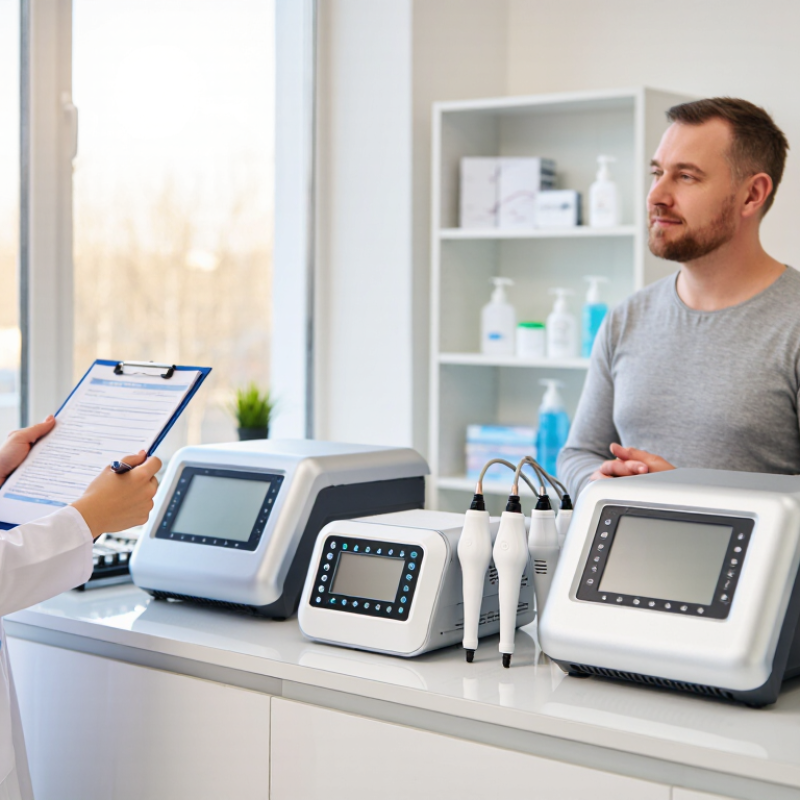
How to Choose Facial Microneedling Devices for Your Clinic

Understanding Facial Microneedling Devices and Their Clinical Uses

Facial microneedling devices create controlled micro-injuries in the skin, prompting a wound-healing response. Clinics commonly consider them for acne-scar appearance, uneven texture, and fine lines. Results vary, and improvement usually takes a series of treatments rather than one dramatic visit. Depth matters. A device should allow clinicians to select settings suited to the treatment area, while disposable needle cartridges support consistent hygiene. Check that the device’s intended use and instructions match the clinic’s planned procedures.

Device choice should follow patient assessment, not a sales chart. Skin condition, treatment area, medical history, and tolerance all affect suitability. Some patients may not be appropriate candidates, so screening and clear consent are essential. Clinicians should also explain realistic outcomes and possible temporary redness, swelling, or pinpoint bleeding. The awkward truth: adjustable depth cannot replace sound clinical judgment.

Demand for minimally invasive treatments provides useful context, but not proof that one device performs better. The American Society of Plastic Surgeons’ 2023 Plastic Surgery Statistics Report recorded about 25.4 million minimally invasive cosmetic procedures in the United States. That figure covers many procedure types, not microneedling alone. Compare devices by documented indications, training requirements, cleaning protocols, cartridge availability, and service support. Ask for evidence behind performance claims, and review it critically. A neat specification sheet is helpful, but it is not clinical evidence.

Assessing Your Clinic’s Patients, Treatments, and Operational Needs

How to Choose Facial Microneedling Devices for Your Clinic

Assessing Your Clinic’s Patients, Treatments, and Operational Needs

Start with the people you treat, not the device catalogue. Are patients seeking help with acne scarring, uneven texture, or fine lines? Review their skin history, treatment goals, comfort with downtime, and relevant risk factors during a qualified clinical assessment. Needs vary. The ASPS 2023 Procedural Statistics Report recorded 25.4 million minimally invasive cosmetic procedures in the United States. That broad figure signals a sizeable aesthetics market, but it is not a microneedling forecast.

Match device features to your actual treatment plan. Adjustable needle depth can support different facial areas, while clear controls help clinicians repeat settings consistently. Check the manufacturer’s instructions, staff training requirements, cartridge availability, cleaning steps, warranty, and service access. Consider the room, too: a compact handpiece and tidy cable can matter during a full schedule. Small details matter. A device may look efficient in a demonstration and still slow down your clinic.

Tips: List your most common patient concerns and planned treatment areas before comparing devices. Ask suppliers to demonstrate setup, cartridge changes, and cleaning using your clinic’s workflow. Track treatment time, consumable costs, and patient feedback during a supervised evaluation. Be honest about what the trial cannot show; a few appointments do not establish long-term outcomes.

Comparing Device Types, Features, and Treatment Capabilities

Choosing facial microneedling devices starts with the treatment goals your clinic can support. Motorized pens offer adjustable needle depth and speed, which can help clinicians tailor procedures across facial areas. Manual rollers are simpler, but may offer less control over penetration angle and consistency. Radiofrequency microneedling adds thermal energy through the needles. That changes the training and safety considerations.

Look beyond the device’s headline features. Check whether depth settings suit the areas you treat, cartridges are sterile and single-use, and the handpiece is comfortable to hold during a full session. Clear instructions, reliable servicing, and accessible training matter too. A bright touchscreen is not a substitute for those basics. Ask what evidence supports the device’s stated treatment capabilities, and whether those claims match your patient population.

Capabilities differ by device and protocol, so avoid assuming that deeper settings produce better results. Patient assessment should include skin history, treatment goals, and factors that may affect healing. Not every patient is a candidate. Keep records of settings and outcomes, and follow the manufacturer’s instructions for cleaning and use. One detail is easy to overlook: even a well-designed device cannot replace sound clinical judgment. The comparison may feel less exciting than reviewing features, but it is often more useful.

How to Choose Facial Microneedling Devices for Your Clinic - Comparing Device Types, Features, and Treatment Capabilities

Device type How it works Typical depth and control Common facial treatment goals Strengths Limitations and considerations Best fit for a clinic
Manual dermaroller A handheld roller moves rows of needles across the skin at an angle. Depth is fixed by the roller. Clinical models vary; needle entry can be less uniform because the needles approach and leave the skin at an angle. Selected texture concerns and superficial treatment protocols, depending on the device and practitioner. Simple design and no motor or electrical system. Less precise around the nose, eyes, and other contours; repeated rolling may increase skin drag. Use only sterile, single-use needle components where required by the device and local rules. Clinics with a specific protocol that benefits from a basic manual tool and does not require fine depth adjustment.
Manual microneedling stamp A handheld tip is placed vertically onto the skin and lifted before moving to the next area. Depth is fixed or manually adjustable on some models; coverage depends on the tip size and application technique. Small or contoured areas that call for targeted placement. Vertical application can offer more localized placement than rolling and can be useful around contours. Treatment speed and consistency depend heavily on operator technique; covering larger areas can be time-consuming. Clinics prioritizing targeted treatment or a manual approach for limited areas.
Motorized non-RF microneedling pen A motor rapidly moves a disposable needle cartridge in and out of the skin; the practitioner glides the handpiece across the treatment area. Many systems offer adjustable needle protrusion, often within a device-specific range of roughly 0.25–2.5 mm or more. Actual treatment depth depends on settings, pressure, skin area, and technique. Skin texture, the appearance of some atrophic acne scars, and fine lines, as appropriate for the patient and treatment plan. Adjustable depth, efficient coverage, and access to a range of cartridge configurations on many systems. Requires training, infection-control procedures, and careful selection of depth and technique. Temporary redness, pinpoint bleeding, and swelling can occur; complications are possible. Clinics seeking a versatile platform for conventional microneedling with adjustable settings.
RF microneedling system Insulated or non-insulated needles deliver radiofrequency energy within the skin as part of the treatment. Needle depth and energy settings vary by system. Some devices allow adjustment of depth and pulse or energy parameters; settings must follow the device instructions and clinical training. Selected concerns involving skin texture, acne-scar appearance, and laxity, based on patient assessment and device indication. Combines needle-based treatment with radiofrequency heating; offers additional treatment parameters compared with non-RF microneedling. More complex training and parameter selection. Risks include burns, scarring, pigment changes, and other adverse effects; appropriate patient selection and technique are essential. Clinics with appropriately trained practitioners, a defined indication, and the capacity to manage device-specific risks and aftercare.
Selection priorities Compare the device’s authorized indications in your jurisdiction, adjustable settings, cartridge availability, sterility and disposal requirements, training and service support, and total operating costs. Select treatment parameters for each patient rather than relying on a single setting. Screen for contraindications, explain expected downtime and risks, and follow the manufacturer’s instructions and local scope-of-practice requirements.

Note: Needle-depth ranges and capabilities differ by device; figures are not interchangeable between systems. Microneedling outcomes and risks vary by patient, treatment area, and practitioner. This comparison is general educational information, not a substitute for device-specific training or clinical judgment.

Evaluating Safety Standards, Training, and Regulatory Requirements

How to Choose Facial Microneedling Devices for Your Clinic

Evaluating Safety Standards, Training, and Regulatory Requirements

Device selection should start with intended use, not a glossy brochure. In the United States, check FDA status, labeling, and permitted indications; elsewhere, consult the relevant regulator. FDA notes that microneedling devices are not cleared for delivering cosmetics, drugs, or vitamin solutions into the skin. A clearance is not blanket permission for every use. Small details matter. Review sterile cartridge requirements, cleaning instructions, contraindications, and adverse-event reporting procedures before purchase.

Training should cover skin anatomy, infection prevention, depth selection, patient screening, and aftercare. Ask for hands-on instruction and a way to assess competency, not just a certificate. The 2023 ISAPS Global Survey estimated 19.1 million nonsurgical aesthetic procedures worldwide. That scale makes consistent safety systems important, even in a small clinic. A polished brochure is not proof of competence. A busy clinic can still miss a step; that possibility deserves honest review.

Tips: Keep a device file with regulatory documents, staff training records, maintenance logs, and incident notes. Check local requirements before treatment, and revisit them when guidance changes. Document everything.

Planning Device Costs, Maintenance, and Ongoing Support

How to Choose Facial Microneedling Devices for Your Clinic

Planning Device Costs, Maintenance, and Ongoing Support

A device’s purchase price is only one part of its cost. Budget for approved treatment tips, staff training, routine servicing, and downtime. Ask for a written estimate of replacement-part prices and service fees. Compare the expected cost per treatment, not just the upfront quote. A lower price can become less attractive if essential parts are difficult to obtain. Keep a little room in the budget for surprises.

Tips: Request the warranty terms in writing. Check who handles repairs, typical response times, and whether loan equipment is available. Keep service records and track consumable use. Simple, but easy to forget.

Before choosing, confirm that cleaning and maintenance instructions fit your clinic’s workflow. Ask how often the device needs inspection and which tasks staff can safely perform. Support should include clear operating guidance, not just a sales contact. Speak with clinics that use similar equipment, and ask what service has actually been like after purchase. Their experience may differ from the estimate. That uncertainty is worth discussing. A short checklist can help: training access, repair process, parts availability, and ongoing costs. Revisit the budget after the first few months, when real usage patterns become clearer.

How to Choose Facial Microneedling Devices for Your Clinic

Example first-year budget (USD)

This illustrative scenario assumes a $4,000 device, 100 treatments using $25 single-use cartridges, a $600 annual maintenance reserve, and $500 for initial staff training. These figures are planning assumptions, not market averages or supplier quotes. Compare written quotes, warranty coverage, service response times, and consumable costs before purchasing.

TOP