Chat with us, powered by LiveChat

What Are the Best Paper Takeaway Containers?

Choosing the best Paper Takeaway Containers is not simply a matter of picking the cheapest box. A container must protect food, feel practical to carry, and suit the meal it holds. A crisp chicken sandwich can soften inside a poorly ventilated package, while a saucy rice bowl may leak through a weak seam. Small details matter.

This guide compares common paper container styles by considering material strength, lining, shape, closure, and everyday handling. It looks at how containers perform with hot, cold, greasy, and moist foods, while recognizing that no single design works perfectly for every menu. A sturdy kraft box may suit fries or baked goods, yet need a suitable barrier for oily dishes. A paper bowl can travel well when its lid fits securely, but lid compatibility should never be assumed. Check samples with real portions before ordering in bulk.

Good packaging also supports a smoother customer experience. Staff need containers that are easy to fill during a busy service, and customers need packages that open without spills. Sustainability deserves careful attention too. Paper content alone does not explain how a product should be disposed of; coatings, local facilities, and supplier details can change the picture. There is no flawless option. The most useful choice balances food protection, cost, handling, and credible product information for the specific business.
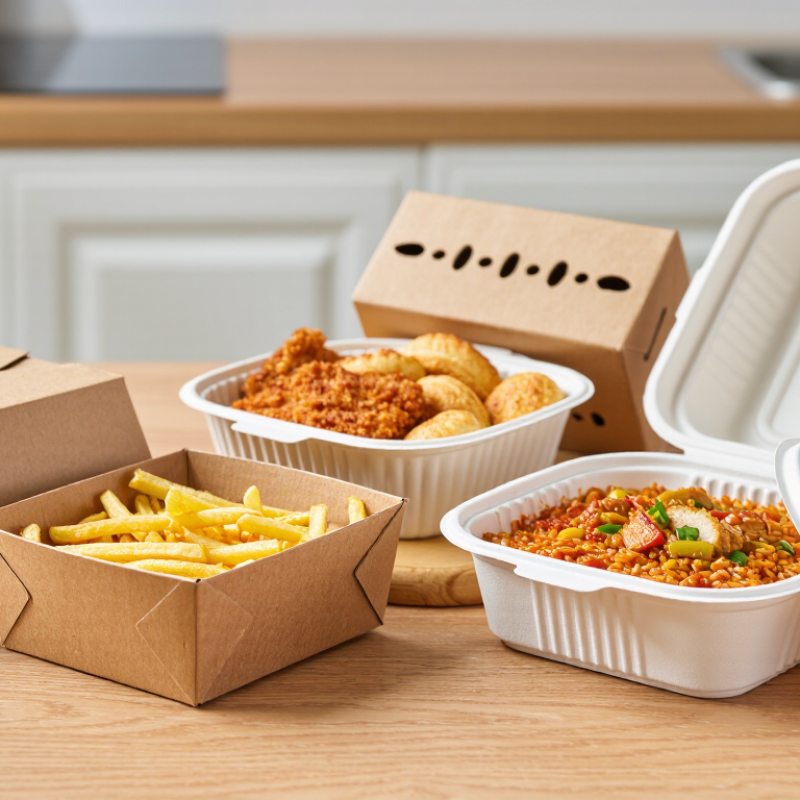
What Are the Best Paper Takeaway Containers?

What Defines a Paper Takeaway Container? Fiber, Form, and Food-Contact Use

What Are the Best Paper Takeaway Containers?

What Defines a Paper Takeaway Container? Fiber, Form, and Food-Contact Use

A paper takeaway container is defined by more than its material label. Its fiber, shape, and food-contact design determine how it performs. Fresh fiber can provide a clean, firm surface, while recycled fiber may suit some uses when its specifications allow. The formed shape matters, too: folded corners, a secure lid, and a stable base help contain meals during handling. Looks simple. It isn’t. Hot soup, oily noodles, and cold salads place different demands on the same basic container.

Tips: Match the container to the meal. Check product information for intended food types, temperature limits, and any moisture or grease barrier. Press lightly on the base and test the lid fit before packing a full serving. A box can feel sturdy when empty, then soften under steam. That detail is easy to miss.

For dependable selection, look for clear supplier documentation on food-contact use and performance, rather than relying on appearance alone. Consider whether the container needs to hold heat, resist oil, or keep wet foods from soaking through. A barrier may improve function, but it can affect disposal options; check local collection guidance instead of assuming every paper package is recyclable. There is no perfect form for every menu. A shallow tray works for dry pastries, while a deeper, lidded box better supports saucy meals. Test with the actual portion. Small differences matter.

How Board Weight and Barrier Coatings Affect Strength, Heat, and Leak Resistance

What Are the Best Paper Takeaway Containers?

Board weight affects how a paper container holds its shape. A heavier board usually resists bending better, especially under a full portion of food. But weight alone does not tell you everything. Board thickness, fiber quality, and the shape of the container also matter. A shallow tray may stay firm, while a tall box can flex at its corners.

Barrier coatings help paper resist grease and moisture. Without a suitable coating, hot sauce or oil can soften the base during a short delivery. A coating can also reduce leaks, but it cannot fix a weak seam or a poorly fitted lid. Heat adds another challenge: steam can collect inside, while condensation may weaken the paper over time. Test containers with the actual food, temperature, and holding period you expect. Small details matter.

I still find paper strength easy to misjudge by touch. A stiff sample may perform differently once filled with hot, heavy food. Ask for clear specifications, then check filled containers for sagging, seepage, and softened edges. Also confirm that the coating and container suit the intended heating method; not every paper package is suitable for reheating. Be cautious with broad claims. A little real-world testing is worth the effort.

How to Match Container Shape and Size to Different Takeaway Foods

The best paper takeaway container is not always the largest one. Shape matters because food shifts during carrying, and empty space can leave delicate items battered. For salads, bowls with a broad base make tossing easier and help keep toppings visible. A snug lid matters too. I still find this easy to misjudge.

Burgers and sandwiches sit more securely in shallow, rectangular boxes. Their corners reduce sliding, while enough headroom helps prevent crushed buns. For noodles or rice dishes, choose a deeper bowl with a stable base and room for utensils. Sauces need extra care. A coated paper interior may resist moisture, but it is worth checking the container’s intended use and testing it with the actual meal.

Match the size to the portion, not just the menu name. A small pastry needs little headroom; a loaded meal needs space without being packed tight. Try placing the food inside before service. Does the lid close without pressing the top? Can the container stay level in a delivery bag? A container that fits neatly on a counter may tip when carried. That detail is easy to overlook. Some foods also release steam, so a tightly sealed box can soften crisp coatings. The right choice may involve a trade-off between warmth, crunch, and leak resistance.

What Are the Best Paper Takeaway Containers? — How to Match Container Shape and Size to Different Takeaway Foods

Use the food’s shape, portion, moisture level, and toppings to guide your choice. Dimensions below are common approximate internal measurements; actual sizes vary by design and supplier.

Takeaway Food Recommended Container Shape Typical Size or Capacity Why It Fits Practical Packing Tip
Burgers, sandwiches, and fries Rectangular paperboard clamshell About 8 × 5 × 3 in (20 × 13 × 8 cm) The wide base supports the food while the hinged lid helps keep the meal together. Choose enough height to avoid pressing down buns or toppings. Keep very crisp fries separate when possible.
Rice bowls, pasta, and mixed hot meals Rectangular or square meal box About 9 × 6 × 2.5 in (23 × 15 × 6 cm), or 8 × 8 × 3 in (20 × 20 × 8 cm) A broad, relatively shallow base makes meals easy to portion and helps keep separate components from piling up. Allow headspace for the lid, especially for meals with sauces or toppings.
Salads, grain bowls, and poke-style bowls Round paper bowl with a fitted lid About 32 fl oz (950 ml); typically 6–7 in (15–18 cm) across The round opening is easy to eat from and accommodates leafy ingredients and mixed toppings. For better texture, pack dressing separately or add a moisture-resistant lining suitable for the food.
Soup, curry, and other liquids Round, leak-resistant paper soup bowl 16 fl oz (475 ml) for a small serving; 32 fl oz (950 ml) for a larger serving The deep, rounded shape holds liquid more securely than a shallow tray. Use a compatible secure-fitting lid, leave room at the top, and check the container’s suitability for hot liquids.
Pizza slices and flatbreads Wide, shallow rectangular slice box About 10 × 7 × 2 in (25 × 18 × 5 cm) The flat footprint supports the slice without folding or crushing the crust. Choose a box slightly larger than the slice and avoid excessive height that allows it to slide around.
Whole small pizzas and shareable flatbreads Square pizza box About 10–12 in (25–30 cm) square and 1.5–2 in (4–5 cm) high The square base provides room for a round pizza and makes stacking straightforward. Match the inside width to the pizza diameter, with a little clearance around the edges.
Pastries, cookies, and small baked goods Shallow rectangular bakery box About 8 × 6 × 2 in (20 × 15 × 5 cm) A shallow, flat base helps protect delicate icing and keeps baked goods visible when opened. For taller items or several layers, choose a deeper box or add a food-safe insert to limit movement.
Small sides, snacks, and desserts Paperboard tray or small paper bowl Tray: about 6 × 4 × 1.5 in (15 × 10 × 4 cm); bowl: 8–12 fl oz (240–355 ml) Compact shapes suit modest portions and can be easier to handle than an oversized meal box. Use a deeper bowl for loose or saucy foods and a shallow tray for items that benefit from spreading out.

What ASTM D6868 Requires: 90% Biodegradation Within 180 Days

Paper takeaway containers can look simple, but their compostability depends on the whole finished item. ASTM D6868 applies to paper products with biodegradable plastic coatings or additives. Its referenced ASTM D5338 test measures biodegradation under controlled aerobic composting. The benchmark is at least 90% biodegradation within 180 days, measured by carbon converted to carbon dioxide against a reference material. The specification also considers disintegration and whether the resulting compost harms plants. That detail is easy to miss.

The 180-day result comes from controlled test conditions, not a backyard pile, landfill, or roadside. The Biodegradable Products Institute’s technical certification criteria also use the 90% benchmark and assess disintegration and chemical limits. When evaluating a container, ask for certification covering the exact finished product. A coating may pass while an ink, adhesive, or lid changes the outcome. Picture a greasy bowl stacked beside a steaming service line: even a certified item needs a local composting facility that accepts it. Facility acceptance varies, so the test result alone does not guarantee the container will be composted.

Sources: ASTM D6868 and D5338; Biodegradable Products Institute, Compostable Products Certification Scheme.

What Happens After Use? EPA Reported an 80.9% Paper Packaging Recycling Rate in 2018

Paper takeaway containers can look simple to recycle, but appearance alone does not decide their next step. The U.S. Environmental Protection Agency reported an 80.9% recycling rate for paper and paperboard containers and packaging in 2018. That figure describes a broad national category, not the fate of every used food box. An important distinction.

After a meal, check the container itself. A dry, uncoated paperboard tray may be accepted locally, while a greasy base or plastic lining can complicate sorting. Scrape out leftover food before placing anything in a bin. Don’t assume a thin inner layer is paper. A quick tear test is not conclusive, either. Collection rules and sorting equipment vary, so local guidance is more useful than a recycling symbol alone.

The 2018 rate shows that paper packaging can move through recovery systems at scale. Still, it does not mean every takeaway container is recyclable everywhere. I find the number encouraging, but easy to overread. A sauce stain or hidden coating can change what happens next. I check the local rules, though I admit I sometimes need to look twice.

TOP